

Why Triple-Lumen Nasogastric Tubes Lower Aspiration Risk in Pancreatitis
Release time: 2026-06-24
Table of Contents
In severe acute pancreatitis, a single misstep in nutrition management can turn a recoverable case into a life-threatening one. Clinicians have long known that how a patient is fed matters almost as much as what they are fed — and the tube itself plays a far bigger role in outcomes than most procurement teams realize.
The Clinical Challenge: Aspiration Risk in Severe Acute Pancreatitis
Severe acute pancreatitis (SAP) patients sit at a dangerous intersection of two competing needs: the gut must be unloaded to reduce pancreatic stimulation, yet early enteral nutrition is essential to preserve the intestinal mucosal barrier and prevent bacterial translocation. Traditional approaches force a trade-off:
- A standard nasogastric tube can decompress the stomach but cannot safely deliver nutrition without re-triggering pancreatic secretion.
- A single-lumen jejunal tube can feed past the pylorus but leaves gastric contents unmanaged, raising the risk of distension, reflux, and aspiration pneumonia.
- Using two separate tubes solves the functional gap but doubles intubation trauma, mucosal injury, and the risk of tube migration or cross-infection.
This is precisely the gap a triple-lumen nasointestinal feeding tube was engineered to close.
How a Triple-Lumen Pathway Interrupts the Aspiration Cycle
Aspiration in SAP rarely happens because of one isolated failure — it’s usually a chain reaction: gastric distension → delayed emptying → reflux → micro-aspiration → pneumonia. A well-designed triple-lumen system breaks this chain at multiple points simultaneously rather than treating each symptom separately.
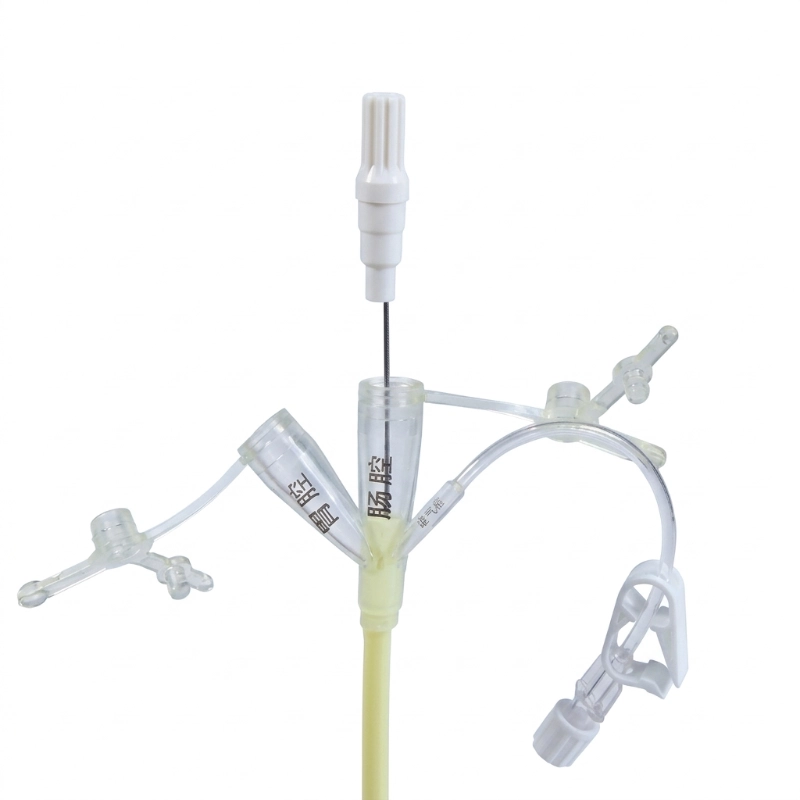
- Gastric Decompression Channel — continuously aspirates gastric fluid and gas, relieving the distension that is the first domino in the aspiration sequence.
- Jejunal Feeding Channel — delivers nutrition directly past the duodenum, bypassing the segment of bowel most responsible for stimulating pancreatic enzyme release.
- Pressure Balancing/Monitoring Channel — vents intragastric pressure to atmosphere or connects to a transducer, preventing the sump effect that causes a tube to adhere to the gastric mucosa during continuous suction.
Because all three functions run through one device, clinicians get post-pyloric feeding and gastric drainage running in parallel — not sequentially, and not through separate intubations. That distinction matters clinically: every additional tube placement is another opportunity for nasal trauma, sinusitis, or accidental misplacement into the airway.
The internal hydrophilic coating and TPU construction used in tubes like the triple-lumen nasointestinal feeding tube also reduce friction during insertion, which lowers the likelihood of mucosal injury that can itself become a secondary aspiration risk factor in sedated or neurologically impaired patients.
Single-Tube vs Multi-Tube Strategies: A Side-by-Side Look
| Clinical Factor | Standard NG Tube Only | Two Separate Tubes (NG + NJ) | Triple-Lumen Tube |
| Gastric Decompression | Yes | Yes | Yes |
| Post-Pyloric Feeding | No | Yes | Yes |
| Pressure Monitoring/Venting | No | No | Yes |
| Intubation-Related Trauma Risk | Low | Higher (2 insertions) | Lower (1 insertion) |
| Cross-Infection Risk | Low | Elevated | Reduced |
| Bedside Workflow Complexity | Simple | Complex | Streamlined |
This comparison isn’t about which tube has more features on paper — it’s about how many separate failure points exist in a critical care airway and GI management workflow. Fewer insertions and fewer connection points generally translate into fewer adverse events over a multi-day ICU stay.
Where the Evidence-Based Guidelines Point
Current enteral nutrition guidance, including ESPEN and ASPEN recommendations for critically ill and pancreatitis patients, consistently favors early enteral feeding over delayed initiation or parenteral nutrition, provided aspiration risk is actively managed. A gastric decompression and jejunal feeding tube that integrates pressure control directly addresses the two biggest operational concerns clinicians raise when trying to follow these protocols: how to feed early without overwhelming a stomach that isn’t ready, and how to monitor intra-abdominal pressure without adding more hardware to an already crowded bedside.
For ICU teams managing ERAS protocols after major GI or abdominal surgery, the same logic applies — early post-operative feeding works best when decompression and nutrition delivery are managed as one coordinated system rather than two competing priorities.
Built for the Realities of Critical Care
Sourcing the right enteral access device isn’t just a procurement checkbox — it directly affects nursing workload, infection control metrics, and patient recovery timelines. AOKOO designs its multi-lumen feeding tubes around the actual failure points clinicians encounter in ICU and gastroenterology settings, from radiopaque positioning stripes for bedside confirmation to ENFit-compatible connectors that prevent dangerous misconnections. For hospitals and distributors evaluating enteral nutrition solutions for high-acuity units, our technical and OEM teams are available to discuss specifications, certifications, and bulk sourcing options.
FAQ
Q: Can a triple-lumen tube replace the need for separate gastric and jejunal tubes entirely?
A: In most SAP and post-surgical cases requiring simultaneous decompression and post-pyloric feeding, yes — a single triple-lumen device performs both functions without requiring a second intubation.
Q: Does pressure monitoring add clinical value, or is it just an extra feature?
A: The pressure/venting lumen actively prevents the gastric mucosa from adhering to the suction port, which reduces trauma risk and can also provide objective data for assessing GI motility and feeding tolerance.
Q: Is this type of tube suitable outside of pancreatitis cases?
A: Yes. It’s also commonly used for ICU patients with gastric retention, post-abdominal-surgery recovery under ERAS protocols, and any case requiring simultaneous gastric drainage and intestinal nutrition.