

How to Choose the Right Pediatric Feeding Tube for Safe Neonatal Care
Release time: 2026-06-11
Table of Contents
Feeding a neonate or infant through a tube isn’t a one-size-fits-all task. Every centimeter of insertion depth, every material choice, and every connector detail carries more weight in a 1.5 kg patient than it ever would in an adult — which is exactly why selecting the right pediatric feeding tube deserves more attention than it typically gets.
What Defines a Reliable Pediatric Feeding Tube
A pediatric feeding tube is a short-term enteral access device designed specifically for neonates, infants, and young children who cannot feed orally — whether due to prematurity, neurological conditions, post-surgical recovery, or feeding intolerance. Unlike adult-sized nasogastric tubes, pediatric variants must account for a smaller anatomical scale, more fragile mucosa, and a far narrower margin for placement error.
Clinically, this means the tube has to do four things simultaneously: insert atraumatically, stay safely in place, allow fast position verification, and avoid introducing any chemical risk to a patient whose organs are still developing.
Five Features That Make a Pediatric Feeding Tube Clinically Dependable
A well-designed neonatal feeding tube isn’t defined by a single feature — it’s the combination of all of these working together:
- DEHP-Free Medical-Grade PVC — removes the plasticizer-leaching concern associated with conventional PVC, which matters because infants metabolize chemical exposure far less efficiently than adults.
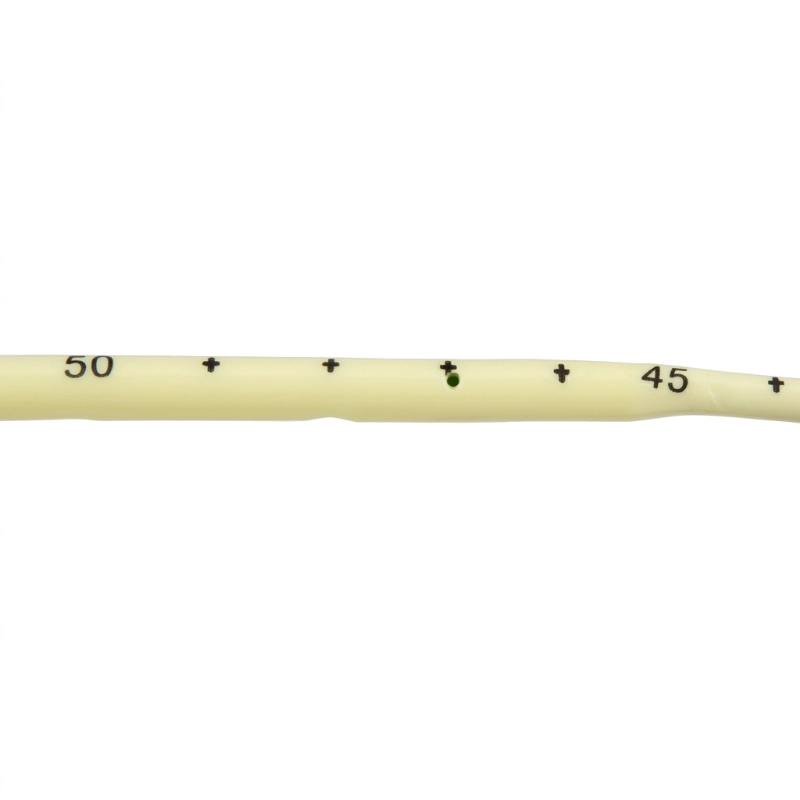
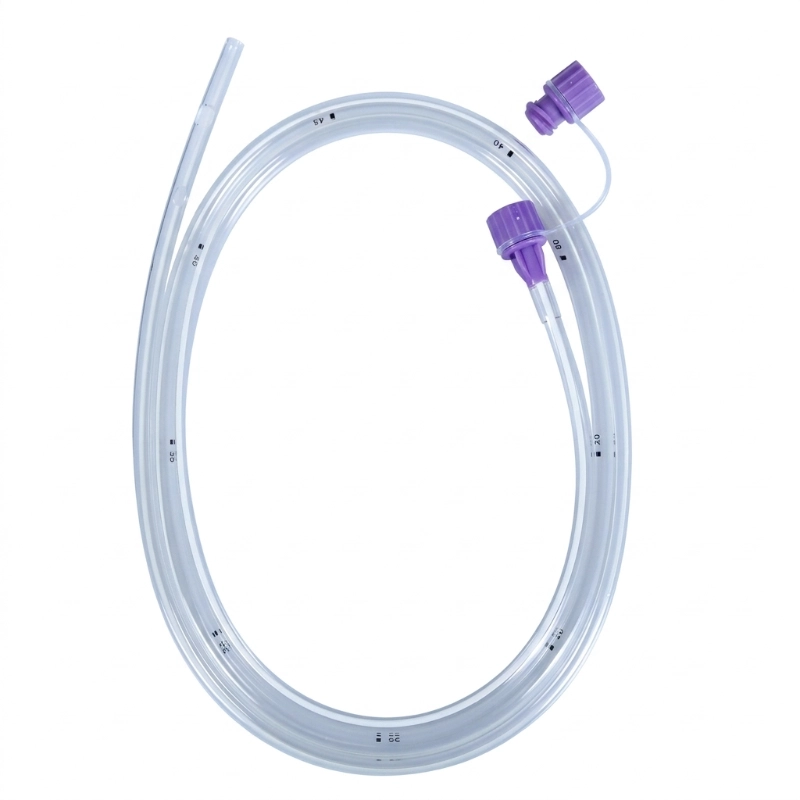
- Precision Centimeter Markings (5–25 cm) — clear, indelible graduations let clinicians measure and document insertion depth accurately, which is critical given how short the usable GI tract length is in small patients.
- Continuous Radiopaque Line — a full-length X-ray opaque stripe enables rapid bedside confirmation that the tube has reached the stomach rather than stopping short in the esophagus.
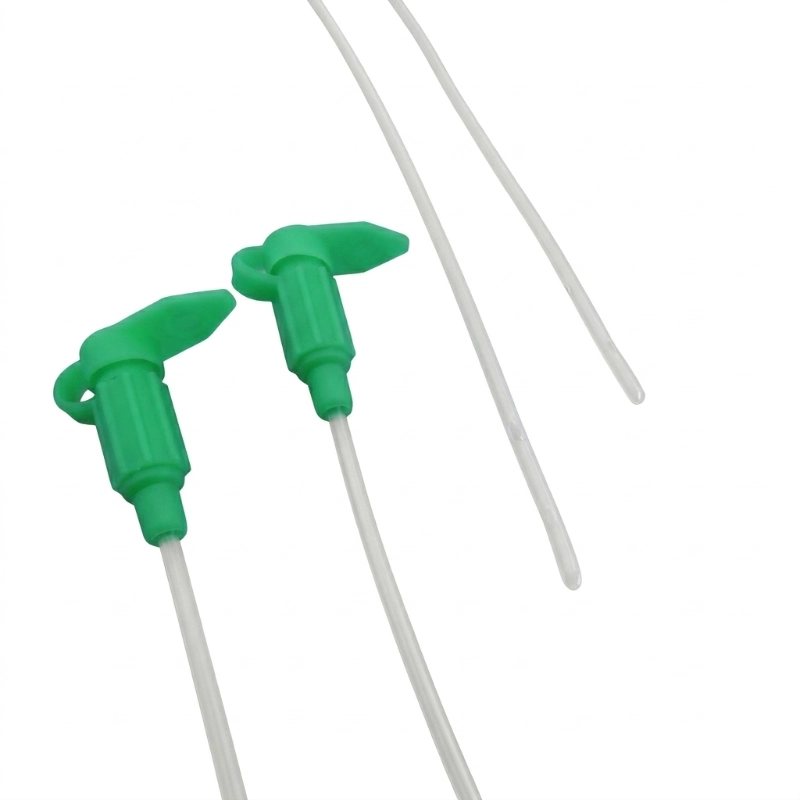
- Atraumatic, Rounded Tip — minimizes mucosal irritation during insertion, which matters in pediatric care where tubes are frequently replaced over the course of a hospital stay.
- Color-Coded Connector with Cap — size-specific coding (5Fr, 6Fr, 8Fr, 10Fr) reduces the chance of selecting the wrong size during a busy shift, while the secure cap prevents leakage and contamination between feeds.
A pediatric feeding tube that integrates all five elements gives clinicians a device they can trust across the full feeding workflow — not just at the moment of insertion.
Why Sizing and Placement Accuracy Matter More in Pediatric Patients
In adult patients, a few centimeters of placement variance rarely changes the clinical picture. In a neonate, the entire usable length of the GI tract is dramatically shorter, so the margin for error shrinks proportionally. Advancing too far or not far enough can lead to feeding intolerance, vomiting, or aspiration. This is why pediatric feeding tube sizing follows a strict French-scale system (typically 5Fr–10Fr depending on age and weight), and why clear centimeter markings paired with radiopaque confirmation give clinicians two independent checks before feeding begins.
DEHP-Free Pediatric Feeding Tube vs Standard PVC Tube
| Factor | Standard PVC Pediatric Tube | DEHP-Free Pediatric Feeding Tube |
| Plasticizer Leaching Risk | Present | Eliminated |
| Suitability for NICU/Long-Term Use | Limited | Recommended |
| Insertion Flexibility | Good | Comparable |
| Regulatory Alignment (FDA/REACH) | Requires disclosure | Preferred classification |
| Depth Marking Accuracy | Varies by manufacturer | Standardized 1cm intervals |
| X-ray Verification | Often absent | Full-length radiopaque line |
The comparison makes clear that a pediatric feeding tube’s value isn’t determined by material alone — it’s the combination of safe construction, accurate sizing, and verification features that determines whether a device meets the practical demands of neonatal and pediatric care.
Where Pediatric Feeding Tubes Are Used in Clinical Practice
- Short-term gastric feeding for premature or low-birth-weight infants
- Neonatal and pediatric ICU nutrition support
- Post-surgical feeding in infants unable to tolerate oral intake
- Medication administration in patients with swallowing difficulty
Built for the Patients Who Need It Most
Designing for neonatal and pediatric patients leaves no room for compromise — every material, marking, and connector detail has to perform exactly as intended. AOKOO manufactures its pediatric feeding tubes using DEHP-free medical-grade PVC, with precision depth markings, full-length radiopaque verification, and color-coded connectors built into every size from 5Fr to 10Fr. For hospitals, distributors, and OEM partners sourcing reliable pediatric enteral access devices, our team can provide full specifications, certifications, and bulk supply options.
FAQ
Q: What sizes of pediatric feeding tubes are available, and how is the right size chosen?
A: Pediatric feeding tubes are typically available in 5Fr, 6Fr, 8Fr, and 10Fr sizes, with selection based primarily on the patient’s age, weight, and clinical condition.
Q: How is correct tube placement confirmed in infants?
A: Placement is confirmed using a combination of centimeter depth markings during insertion and a continuous radiopaque line visible on X-ray, giving clinicians two independent verification points.
Q: Is a pediatric feeding tube intended for long-term use?
A: No. PVC pediatric feeding tubes are generally designed for short-term feeding, with replacement frequency determined by hospital protocol and the patient’s clinical status.
Q: Why is DEHP-free material specifically important for this patient group?
A: Infants have immature liver and kidney function, meaning they clear chemical exposures less efficiently than adults — making the elimination of phthalate plasticizers like DEHP a meaningful safety consideration in long-term or repeated use.