

How Does a Guidewire Improve Nasogastric Tube Placement?
Release time: 2026-09-07
Table of Contents
Nasogastric tube placement can become challenging when the catheter needs to navigate anatomical curves while maintaining sufficient control. A tube that is highly flexible may improve patient comfort but can be harder to advance, while a tube that is too rigid may increase mechanical irritation.
A guidewire-assisted nasogastric tube addresses this engineering challenge by temporarily increasing the catheter’s controllability during insertion. After the tube reaches the intended position, the guidewire can be removed, leaving the flexible feeding tube in place.
This combination of flexibility and controlled stiffness makes a Guidewire Nasogastric Tube particularly useful for clinical applications where insertion precision matters.
What Is a Guidewire Nasogastric Tube?
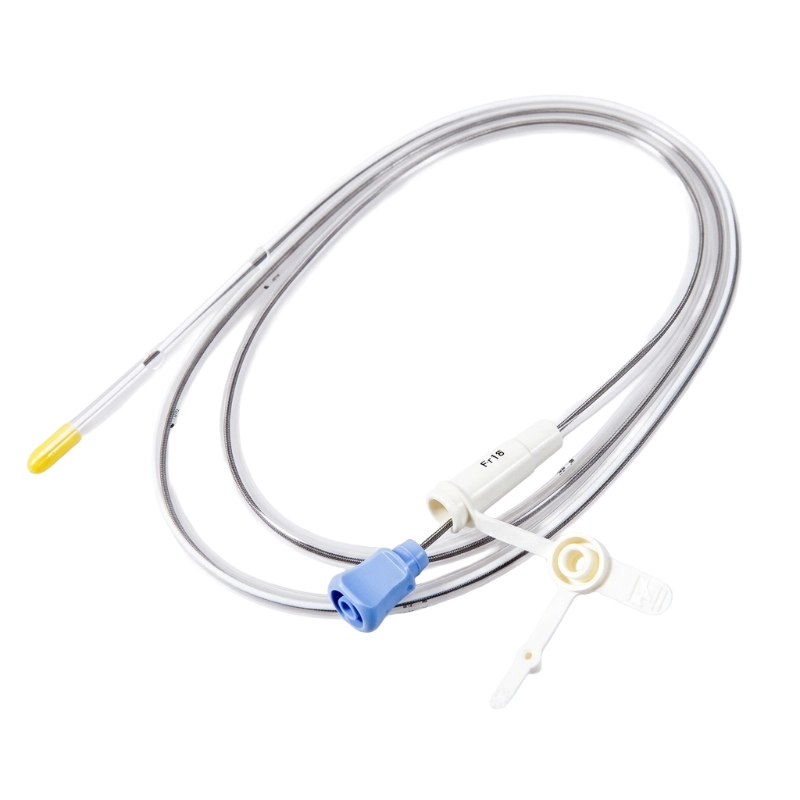
A guidewire nasogastric tube is a feeding catheter supplied with a removable stylet or guidewire positioned inside the tube during insertion.
The guidewire provides temporary structural support. Instead of advancing a highly flexible catheter alone, the clinician can manipulate the reinforced tube during placement.
After the catheter reaches the intended position, the guidewire is removed according to the applicable clinical procedure.
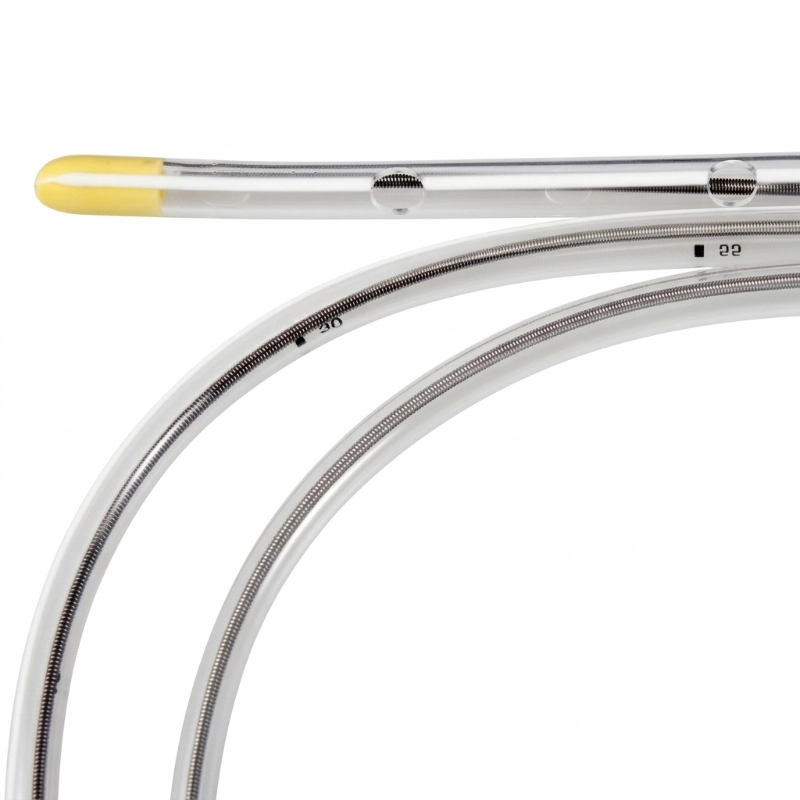
AOKOO’s TPU nasogastric feeding tube uses a 304 stainless-steel stylet with a fine spring structure and specially treated surface. The guidewire tip is rounded and smooth to reduce the possibility of damaging the catheter’s inner wall.
Why Can Flexible Feeding Tubes Be Difficult to Place?
Flexibility is valuable for patient comfort, but excessive flexibility can reduce pushability and directional control.
During nasogastric placement, the tube must pass through several anatomical transitions. If the distal catheter bends excessively rather than advancing, the operator may have difficulty controlling its trajectory.
This creates a design trade-off:
The tube must be flexible enough for patient tolerance while remaining controllable enough for insertion.
A guidewire helps resolve part of this trade-off by temporarily increasing the tube’s axial support.
How Does a Guidewire Improve Tube Control?
The guidewire changes the mechanical behavior of the catheter during insertion.
Without a stylet, the feeding tube relies primarily on its own wall stiffness. With a guidewire, the internal support can improve:
- Pushability
- Directional control
- Resistance to unwanted buckling
- Handling during advancement
- Stability during difficult insertion
| Design | Flexibility | Insertion Control | Typical Consideration |
|---|---|---|---|
| Flexible tube without guidewire | High | Moderate | Suitable for routine applications |
| Tube with standard stylet | High after removal | Higher during insertion | Better procedural control |
| Tube with optimized guidewire | High after removal | Enhanced | Suitable for applications requiring controlled advancement |
The guidewire does not replace proper clinical technique. Instead, it is a mechanical aid incorporated into the catheter design.
What Makes a Good Guidewire Design?
Not every guidewire has the same performance characteristics.
A medical guidewire needs to provide sufficient support without becoming excessively rigid. Its surface and distal tip also require careful engineering.
AOKOO’s guidewire incorporates:
304 Stainless Steel
The stylet uses 304 stainless steel and a fine spring structure designed to balance softness and hardness.
Rounded Distal Tip
The guidewire tip has a smooth, rounded design intended to reduce the risk of scratching the inner catheter wall during insertion and removal.
Controlled Flexibility
The guidewire needs sufficient stiffness to support advancement while maintaining appropriate compliance.
These characteristics are important because the guidewire interacts directly with the internal surface of the feeding tube.
Guidewire vs No Guidewire: Which Is Better?
Neither configuration is universally superior.
The right choice depends on the clinical application, patient condition, tube design, and placement method.
| Consideration | Feeding Tube Without Guidewire | Feeding Tube With Guidewire |
|---|---|---|
| Tube flexibility | High | High after guidewire removal |
| Insertion support | Lower | Higher |
| Directional control | Moderate | Enhanced |
| Procedural complexity | Simpler | Requires guidewire handling |
| Difficult placement | May be less controllable | Can provide additional support |
| Long-term feeding | Possible | Guidewire is removed before routine use |
A guidewire is primarily an insertion aid. It should not be confused with the tube’s long-term feeding function.
How Does Guidewire Technology Work With TPU?
Material selection and guidewire design are closely connected.
TPU is flexible and can be engineered for long-term enteral feeding. However, a very flexible catheter may benefit from internal support during initial insertion.
This makes TPU + guidewire a complementary design:
TPU provides flexibility for patient use, while the guidewire provides temporary stiffness for insertion.
AOKOO combines Medical Grade TPU with a removable stylet, radiopaque lines, hydrophilic coating, and different connector options.
This integrated design allows one catheter to provide different mechanical characteristics at different stages of use.
Can a Guidewire Also Improve Post-Pyloric Placement?
Guidewire support can be particularly relevant when a tube needs to travel beyond the stomach.
Post-pyloric feeding requires the distal tip to pass through the pylorus and reach the duodenum or jejunum. This may require more controlled manipulation than straightforward gastric placement.
AOKOO’s dual-lumen and triple-lumen nasogastric/nasointestinal feeding tubes can be configured with optional guidewires for post-pyloric applications.
However, guidewire assistance alone does not guarantee successful post-pyloric placement. Appropriate clinical technique, tube geometry, patient anatomy, and position verification remain essential.
What Other Tube Features Should Be Evaluated?
When purchasing a Nasogastric Tube with Stylet, hospitals should evaluate the entire product rather than the guidewire alone.
Hydrophilic Coating
A hydrophilic coating can form a lubricating hydrogel layer when hydrated, reducing friction during insertion.
Radiopaque Line
Radiopaque markers can improve X-ray visibility when radiographic position assessment is clinically required.
Tip Design
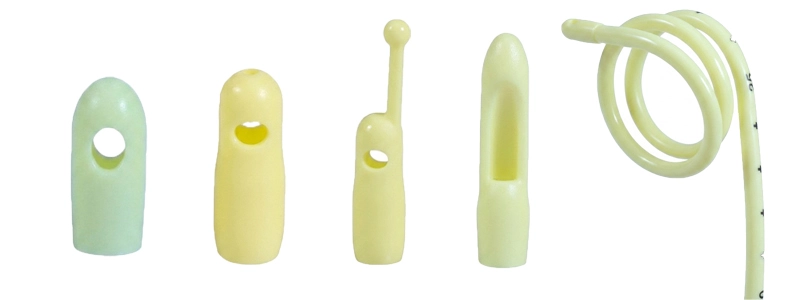
A rounded or bullet-style tip can influence insertion characteristics and interaction with anatomical structures.
Connector
ENFit-compatible connectors can support integration with standardized enteral feeding systems.
Tube Size
AOKOO provides multiple French sizes for its TPU feeding tube platform, allowing product selection according to clinical requirements.
Why Choose AOKOO Medical for Guidewire Feeding Tubes?
AOKOO Medical combines medical-grade TPU catheter technology with guidewire-assisted insertion, hydrophilic coating, radiopaque visibility, and configurable connector systems.
Its guidewire uses 304 stainless steel and is designed with a smooth, rounded tip, while the catheter itself is engineered for flexibility and kink resistance.
For hospitals, distributors, and OEM partners looking for a Nasogastric Tube with Stylet, AOKOO can provide configurable enteral feeding solutions designed around insertion control, patient comfort, and long-term clinical performance.
Frequently Asked Questions
What is a guidewire nasogastric tube?
It is a nasogastric feeding tube containing a removable stylet or guidewire that provides additional structural support and control during insertion.
Why use a stylet in a feeding tube?
A stylet can improve pushability and directional control during insertion, particularly when the flexible catheter requires additional temporary support.
Is the guidewire left inside the patient?
For removable-stylet feeding tubes, the guidewire is generally an insertion aid and is removed according to the applicable clinical procedure before routine feeding.
What material is used for AOKOO’s guidewire?
AOKOO’s guidewire uses 304 stainless steel with a fine spring structure and a rounded distal tip.
Can a guidewire feeding tube be used for post-pyloric feeding?
Certain guidewire-assisted configurations can be designed for nasoenteric or post-pyloric applications. AOKOO offers optional guidewire configurations for its dual- and triple-lumen nasointestinal feeding tubes.