

Uncoated vs Hydrophilic Catheters: B2B Sourcing
Release time: 2026-05-26
Medical distributors face a critical pivot in urological supplies. Traditional uncoated catheters are increasingly rejected due to patient discomfort and infection risks.
Today, zero-friction insertion dictates hospital tenders and homecare purchasing. This shift forces B2B procurement teams to rapidly upgrade their product portfolios.
Sourcing the right hydrophilic technology isn’t just about clinical outcomes; it is the definitive strategy for securing long-term contracts.
The Clinical Reality: Why Uncoated Catheters Are Losing Ground
For decades, the standard of care relied on bare PVC tubes paired with separate lubricant packets. However, urologists and continence nurses are aggressively phasing these out due to inherent design flaws that compromise patient safety.
The Stick-Slip Phenomenon: Manual lubrication is notoriously uneven. As an uncoated tube travels through the urethra, dry patches create severe friction. This micro-trauma causes urethral bleeding, strictures, and significant pain for the patient.
Breach of Sterile Protocol: Applying gel requires the user to handle the catheter directly. This hand-to-tube contact introduces external bacteria, drastically increasing the risk of Catheter-Associated Urinary Tract Infections (CAUTI).
Homecare Friction: For patients requiring daily intermittent catheterization, carrying bulky tubes and messy gel packets reduces compliance. The inconvenience often leads to delayed bladder emptying, causing further renal complications.
The Engineering Behind Hydrophilic Technology
The modern solution relies on advanced polymer chemistry rather than external gels. When evaluating products for wholesale, distributors must understand the mechanical superiority of water-activated coatings.
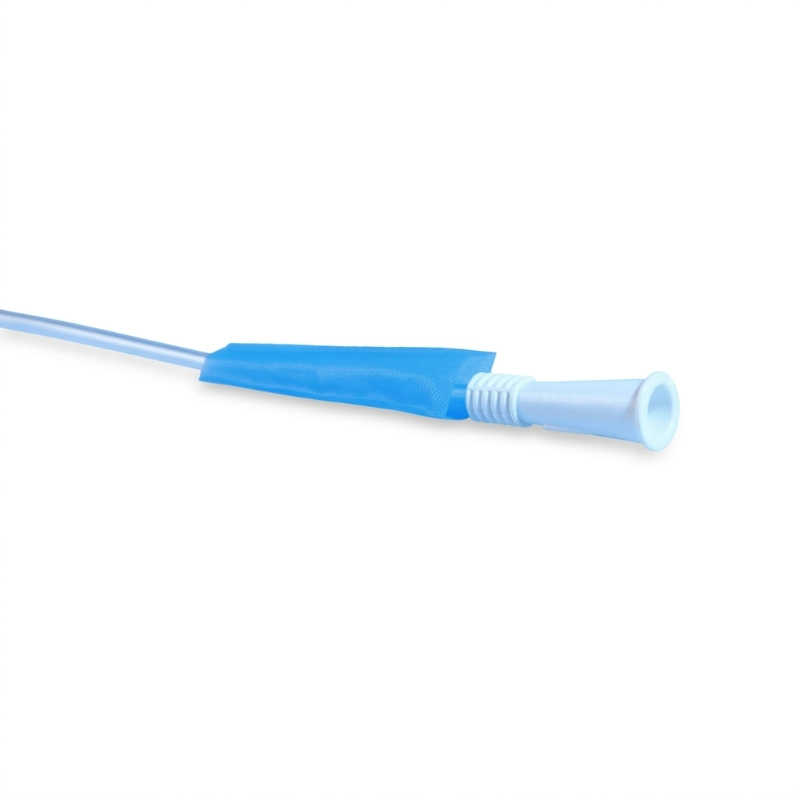
Osmotic Binding: The surface is covalently bonded with polymers like Polyvinylpyrrolidone (PVP). When exposed to sterile water, this coating binds water molecules directly to the tube, expanding to create a microscopic, frictionless cushion.
Zero Mucosal Adhesion: This chemical reaction creates a truly low friction urethral catheter that glides seamlessly. The coating remains fully intact upon extraction, ensuring no residual trauma.
Polished Atraumatic Eyelets: High-end manufacturing ensures the drainage holes (eyelets) are meticulously fire-polished or heat-staggered. This prevents the sharp plastic edges from scraping the delicate urethral lining during insertion.
Sourcing Comparison: Uncoated vs. Hydrophilic Options
Understanding the stark contrast between these two options is vital for aligning your B2B purchasing strategy with market demands.
| Feature Matrix | Uncoated PVC Catheters | Hydrophilic Catheters | B2B Procurement Impact |
| Lubrication | Requires manual gel application | Instant water-activated coating | Hydrophilic commands higher margins and repeat orders. |
| UTI Risk Profile | High (due to manual handling) | Extremely Low (no-touch technique) | Hospitals mandate hydrophilic to reduce CAUTI penalties. |
| Patient Compliance | Low (painful, messy to use) | High (painless, discreet packaging) | Drives long-term brand loyalty in the homecare sector. |
| Unit Cost | Lowest initial wholesale cost | Moderate premium over uncoated | Premium is offset by reduced infection treatment costs. |
Securing Hospital Tenders with a Proven Manufacturer
Upgrading a medical catalog requires partnering with a reliable intermittent catheter OEM supplier capable of meeting stringent international regulatory standards. Price alone will no longer win public health tenders.
The global market has zero tolerance for toxic plasticizers. Your sourced products must be explicitly DEHP-free and Latex-free. This protects sensitive patients, including pediatrics and pregnant women, from endocrine disruption and anaphylactic shock. Furthermore, an integrated sterile water sachet enables a 100% “no-touch” aseptic technique, which is heavily favored in modern clinical audits.
Elevate Your Supply Chain with Aokoo Medical
Transitioning your urological portfolio requires a manufacturing partner capable of scaling with your ambitions. Aokoo Medical stands at the forefront of consumable medical device manufacturing, engineering advanced hydrophilic nelaton catheter solutions that eliminate urethral trauma and slash CAUTI risks.
Backed by robust OEM/ODM production lines and strict adherence to Latex-free and DEHP-free medical-grade standards, Aokoo Medical empowers global distributors to win lucrative hospital tenders and build unshakeable brand loyalty in the homecare market. Whether you require standard catalog sourcing, custom sizing from CH06 to CH18, or localized packaging specifications, our manufacturing precision ensures your supply chain remains competitive, compliant, and clinically superior.
Frequently Asked Questions
Q: How does the hydrophilic coating reduce CAUTI risks?
By eliminating the need to manually apply lubricating gel, hydrophilic designs support a strict “no-touch” insertion technique. Furthermore, the perfectly smooth, water-bound surface prevents bacterial colonization and micro-abrasions along the urethral tract, closing the primary pathways for infection.
Q: Are these catheters suitable for pediatric patients?
Yes. Pediatric urethras are highly susceptible to friction damage. A hydrophilic surface is considered the gold standard for children, provided the products are correctly sized and manufactured strictly without DEHP or Latex to ensure toxicological safety.
Q: What is the shelf life of a hydrophilic catheter with an integrated water sachet?
High-quality OEM hydrophilic catheters utilize robust foil or heavy-duty blister packaging to prevent moisture evaporation. They typically maintain a verified sterile shelf life of 3 to 5 years, making them highly stable for global B2B shipping, warehousing, and distribution.