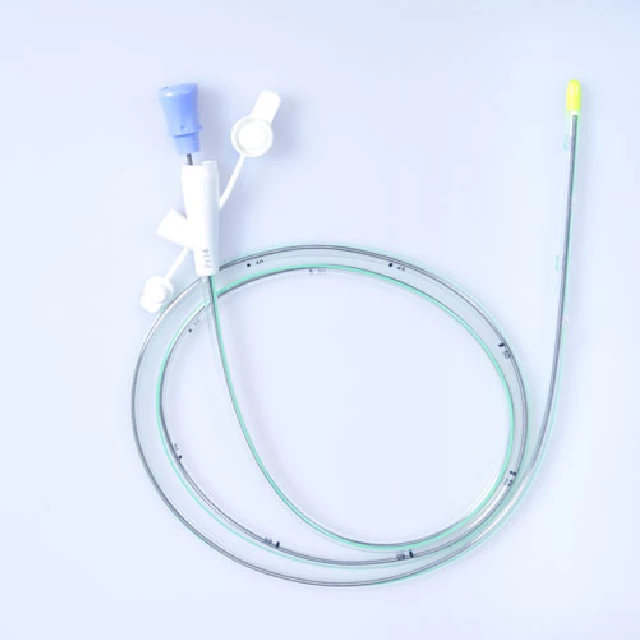


Triple Lumen Nasogastric Tube with Temperature and Pressure Sensors
Release time: 2026-09-12
The Patent Wall No One Could Get Past
Last year, a friend working on esophageal manometry catheters came to me. His team was completely blocked by a Pulmomed patent.
CN113766873A comes down to one thing: a sensor with a balloon next to it. If you also use a balloon to isolate tissue, you cannot get around it. Change the shape to square, round, or oval — the dependent claims are written so densely that every route is closed.
His engineers tried making the catheter thinner, hoping small dimensions would slip through. The accuracy collapsed. They tried hydrophilic coatings — still no good. The reading jumped the moment it touched the esophageal wall. After six months of this, the boss said: drop it, move on.
0.4 mm — Tearing Down the Patent Wall
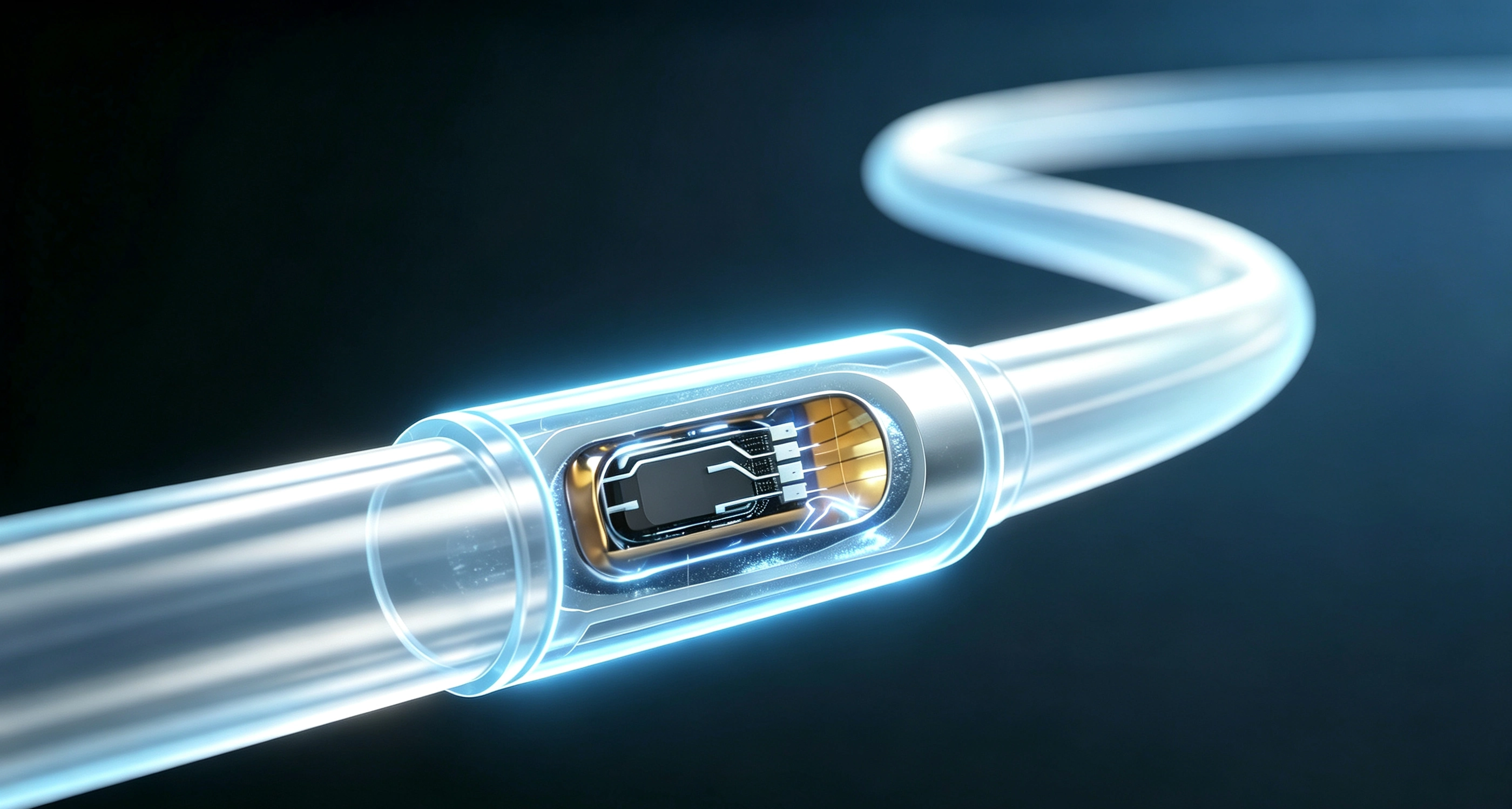
Later, when our factory’s temperature and pressure sensing triple lumen nasogastric tube officially entered mass production, my first thought was his dilemma.
At the core of this tube is a micro MEMS sensor, encapsulated in the esophageal section of the catheter wall. The sensor is only 0.4 mm in diameter — thinner than a typical guidewire.
No balloon. Just a rigidly packaged sensing unit, wrapped in PI or a metal shell, embedded into the catheter wall. The esophageal wall can press against it all it wants — the chip inside is sealed tight, and external force cannot squeeze it.
The core difference from the patented approach is clear: we do not use a balloon at all, so there is no infringement to speak of.
The Data Is on the Table
After 14 days in saline, drift stayed under 3 mmHg. It moved slightly in the first 24 hours, then ran almost flat.
What does that mean? No need to use a balloon to “push” tissue aside and create an artificial isolation environment. The sensor itself is small enough and stable enough — tissue can move however it wants, and it keeps measuring.
My friend later took a batch of samples through an animal trial. He came back and said the pressure waveform matched the gold-standard device, and the catheter OD was nearly half of what it used to be. His exact words: “If I’d known this existed, I wouldn’t have spent six months working around that patent.”
Triple Lumen — One Tube, Three Jobs
Unlike a standard nasogastric tube,the Triple Lumen Nasogastric Tube with Temperature and Pressure Sensors:
The three functions do not interfere with each other. The sensor signal is routed through insulated wires inside the catheter wall and connects to a standard I²C digital interface, continuously outputting esophageal pressure, gastric pressure, and temperature. Sampling runs dozens of times per second, with drift under 3 mmHg over 24 hours.
ICU and Respiratory Care — Same Struggle Every Day, Still No Way Out
Today, the Triple Lumen Nasogastric Tube with Temperature and Pressure Sensors is used most often in the ICU and respiratory critical care departments.
An ICU director at a tertiary hospital in Jiangsu told us: they used to run lung-protective ventilation, but when airway pressure looked high, they could not tell whether the problem was the lung or the chest wall — so they did not dare adjust parameters. Once esophageal pressure became available, transpulmonary pressure was clear, and the ventilation strategy could change immediately. He called it a problem they ran into Same Struggle Every Day, Still No Way Out. PEEP titration time dropped from 36 minutes to under 10.
For ARDS patients in prone position, chest wall compliance shifts with every repositioning. With the Triple Lumen Nasogastric Tube with Temperature and Pressure Sensors, respiratory therapists can adjust PEEP in real time, keeping the alveoli open without overdistension.
There is also an unexpected use in weaning assessment. The traditional spontaneous breathing trial can be passed without guaranteeing successful extubation. With a continuous trend of transpulmonary pressure, clinicians can judge how well the diaphragm is recovering — and time the weaning window more accurately.
There is also an unexpected use in weaning assessment. With a continuous trend of transpulmonary pressure, clinicians can judge how well the diaphragm is recovering — and time the weaning window more accurately.
| Department | Key Metrics | Clinical Benefit |
|---|---|---|
| ICU | Transpulmonary pressure, PEEP titration | Reduces VILI risk, shortens ventilation time |
| Respiratory & Critical Care | Intrinsic PEEP differentiation | Distinguishes airway vs. chest wall causes |
| Emergency Critical Care | Transpulmonary pressure trend | Lowers extubation failure rate |
Run the Numbers — It Is Not Expensive
On unit price alone, the Triple Lumen Nasogastric Tube with Temperature and Pressure Sensors does cost more than a standard tube. But in critical care, that is not how the math works.
One standard tube plus one esophageal manometry catheter means two consumables, an extra intubation, and extra discomfort. Factor in fewer ICU days, and the sensor cost is largely covered. The Triple Lumen Nasogastric Tube with Temperature and Pressure Sensors replaces two tubes with one.
The tube ships with the cable pre-welded and a standard pin connector. A structural engineer can thread it through, plug the rear PCB in, and read data directly over I²C — no calibration algorithm to write. Now a line worker can test it in two passes.
When Enough People Walk a Path, It Becomes a Wall
Sometimes I think the bottleneck in domestic medical devices is not just chips and materials — it is these unremarkable sensing-layer components. Everyone is used to walking the path someone else has walked: to measure transpulmonary pressure, you need a balloon; to measure core temperature, you add another tube. Nobody seems to consider that if you push the sensor itself to its limit, the path is right under your feet.
This is not a disruptive invention. It simply makes good use of a pathway that already exists in the patient, letting one tube solve both monitoring and nutrition at the same time.
If you are also working around a patent wall, or being tortured by catheter dimensions and accuracy, reach out and ask us for a few samples.