

That Could Save Your Next Bedside Placement
and why that matters for your ICU workflow
That’s exactly why we redesigned our gastrointestinal tubes from the inside out.
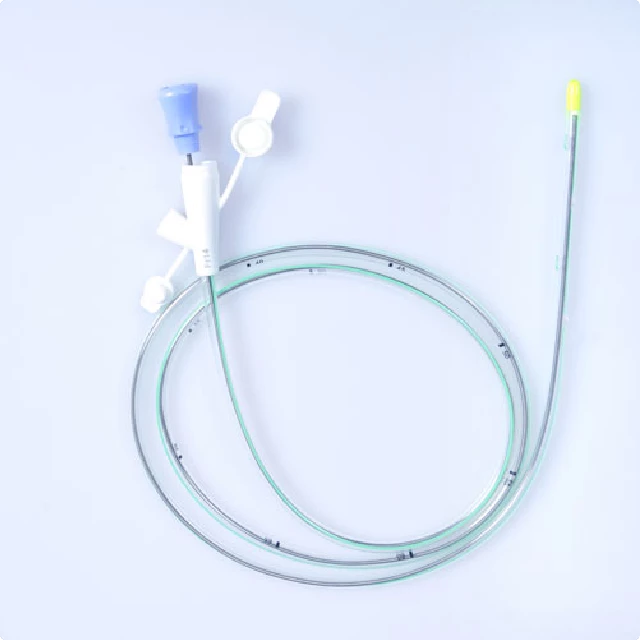
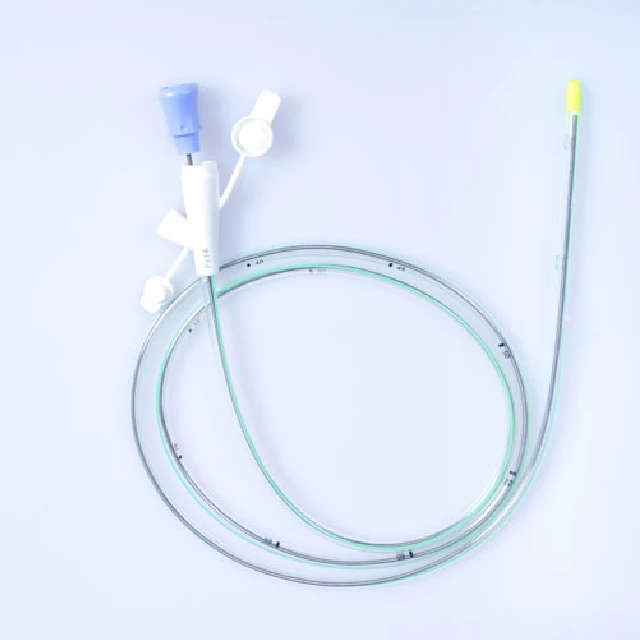
Not one stripe. Three.
Straight or kinked?
Stripes stay parallel → good. Stripes bunch up → trouble.
Twisted?
Pattern distorts → you know before you push further.
Where’s the tip—really?
Gastric vs. jejunal becomes obvious at a glance.
- Fewer repeat X-rays. One shot, one read, one decision.
- Less aspiration risk. You spot misplacement before it becomes an event.
- No more guessing games. Your whole team sees the same clear image.
Adding three high-density stripes sounds simple. Making them stay straight, stay bonded, and stay symmetrical through heat coating and sterilization—that’s the hard part.
Thermal warping
Single-stripe tubes curl during hydrophilic coating. Our symmetrical three-stripe layout balances heat stress, so the tube comes out dead straight.
Stripe breakage
Barium sulfate doesn’t flow like plastic. We reformulated the compound and retooled our extrusion dies until we got continuous, unbroken stripes.
Concentricity drift
We added in-line laser monitoring to catch any shift before it reaches your patient.
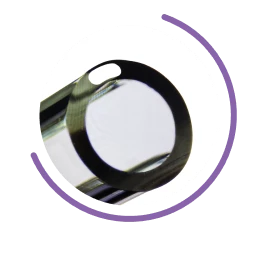
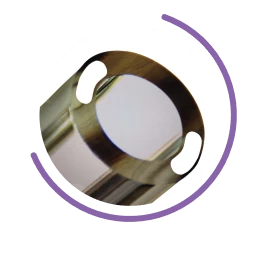
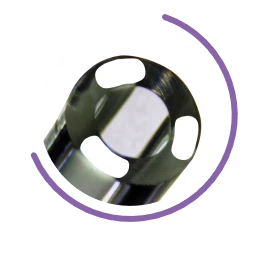
Bowel wall-embedded barium sulfate strip (multi-line radiopaque) technology is more than a process innovation — it is a deep-seated commitment to the safety, precision, and reliability of gastrointestinal feeding catheters. From compound formulation to die design, from co-extrusion to in-process monitoring, every step is held to the highest standard — delivering a trustworthy access solution for clinical teams and patients alike.