

Standard NJ Tube vs. Dual Lumen NJ Tube: Which Offers More Functionality?
Release time: 2026-11-02
Table of Contents
Nasojejunal (NJ) tubes are used to deliver enteral nutrition into the jejunum when feeding beyond the stomach is indicated. However, not all NJ tubes have the same internal structure. A standard NJ tube generally provides a single feeding pathway, while a dual-lumen NJ tube can combine jejunal feeding with a separate gastric decompression channel.
For healthcare professionals and medical-device buyers, this distinction matters when evaluating patients who require both post-pyloric nutrition and gastric drainage. The right choice depends on the required functions, not simply on the number of lumens.
What Is a Standard NJ Feeding Tube?
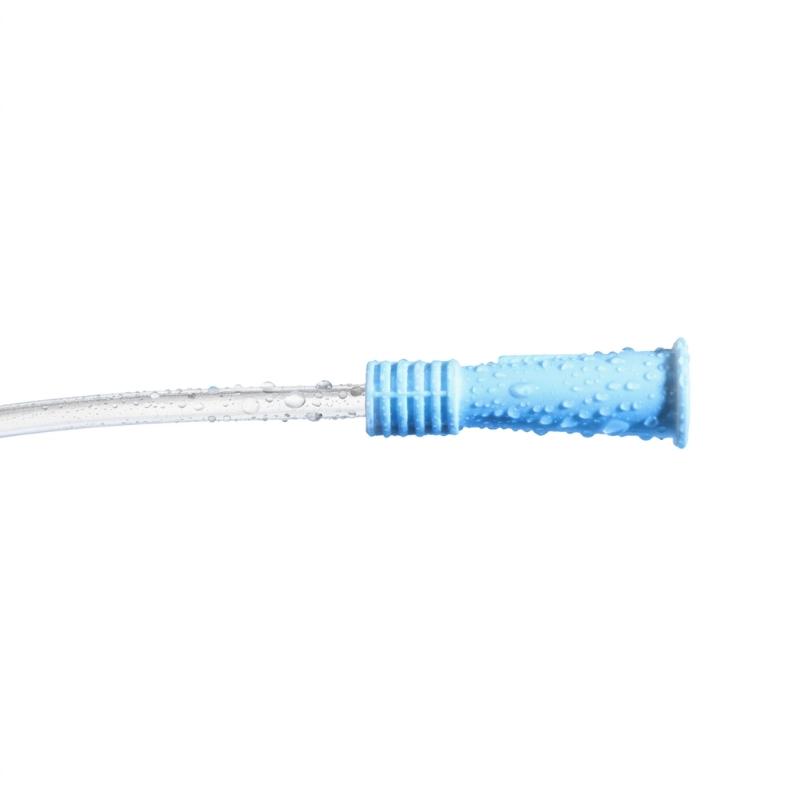
A standard nasojejunal tube is inserted through the nose, passes through the stomach, and is advanced so that its distal feeding tip is positioned in the jejunum.
Its primary function is to deliver enteral formula beyond the pylorus.
Common characteristics include:
- A single internal feeding channel.
- A distal tip designed for the intended post-pyloric position.
- Different sizes and lengths depending on the product.
- Optional guidewire or placement-support features on selected models.
- Radiopaque markers on some products to support imaging-based position assessment.
A standard NJ tube may be suitable when jejunal feeding is required and a separate gastric decompression pathway is not needed through the same device.

What Is a Dual Lumen NJ Feeding Tube?
A dual-lumen NJ tube is designed with two separate internal pathways. In a typical nasogastric/nasointestinal configuration, these channels serve different purposes:
- Jejunal feeding: Delivers enteral formula through the distal feeding pathway.
- Gastric decompression: Provides a separate route for draining gastric contents and gas.
This design allows both functions to be managed through one tube assembly when the patient’s clinical plan requires them.
The distinction is important: the feeding pathway and drainage pathway are not interchangeable. Each lumen and connector must be used according to the device’s instructions.
Standard NJ Tube vs. Dual Lumen NJ Tube
| Comparison | Standard NJ Tube | Dual Lumen NJ Tube |
|---|---|---|
| Internal channels | One | Two |
| Jejunal feeding | Yes | Yes |
| Separate gastric decompression | Not through a dedicated second lumen | Yes, in the relevant configuration |
| Main function | Post-pyloric nutrition | Post-pyloric nutrition plus gastric drainage |
| Device structure | Simpler | More complex |
| Connection requirements | Primarily one feeding pathway | Separate feeding and drainage connections |
| Potential application | Jejunal feeding without a combined drainage requirement | Cases where both jejunal feeding and gastric decompression are required |
A dual-lumen design offers an additional function, but that does not make it the preferred choice for every patient receiving NJ feeding.
When Is a Standard NJ Tube Sufficient?
A standard NJ tube may be appropriate when the clinical requirement is to provide nutrition directly into the jejunum without a need for separate gastric drainage through the same device.
Potential applications include:
- Patients who require post-pyloric nutrition.
- Patients who cannot tolerate gastric feeding and have an indication for jejunal feeding.
- Situations where gastric decompression is not part of the required tube function.
- Care plans where a single feeding pathway meets the nutritional access requirement.
The clinical team must determine the appropriate placement method, tube position, feeding regimen, and monitoring process.
The advantage of a standard NJ tube is its more straightforward functional design. If only one feeding pathway is needed, adding another lumen may introduce unnecessary connections and handling requirements.
When Should a Dual Lumen NJ Tube Be Considered?
A dual-lumen NJ tube may be considered when a patient needs jejunal nutrition while gastric contents also need to be drained.
This combination may be relevant in selected situations involving:
- Gastric retention or impaired gastric emptying.
- Gastrointestinal obstruction or other conditions requiring decompression.
- Certain postoperative care plans.
- Critical-care situations where post-pyloric feeding and gastric drainage are both clinically indicated.
The separate channels allow the care team to manage these functions through one tube assembly, subject to the product’s design and instructions for use.
However, the device does not independently determine the appropriate feeding or drainage strategy. Clinical assessment, correct placement, and ongoing monitoring remain essential.
How Does the Dual-Lumen Structure Work?
A dual-lumen nasogastric/nasointestinal tube typically has a wider proximal section containing two channels and a narrower distal section containing the feeding pathway.
The design must allow the two proximal functions to remain separate while providing a suitable distal route for jejunal nutrition.
Important engineering considerations include:
Separate channel pathways
The feeding and drainage lumens should have clearly defined functions and corresponding connection points. Port identification is important for correct handling.
Smooth internal transition
The junction between the dual-lumen and single-lumen sections deserves attention. Abrupt internal steps or irregular surfaces may create areas where formula residue accumulates.
Lumen dimensions
The external French size does not reveal the internal diameter of each channel. Buyers should request the relevant dimensional specifications.
Tube flexibility
Material and wall construction influence the tube’s mechanical properties. The exact model’s specifications and intended duration of use should be reviewed.
What Other Features Matter in an NJ Feeding Tube?
Lumen configuration is only one part of product selection. Hospitals and distributors should also evaluate the following features.
| Feature | Why it matters |
|---|---|
| Tube length | Must suit the intended post-pyloric application |
| French size | Describes approximate external diameter, not internal lumen size |
| Tip design | Should match the product’s intended placement approach |
| Guidewire | May provide insertion support when included and used as instructed |
| Radiopaque marking | Supports X-ray visualization when imaging is used |
| Material | Affects flexibility and other mechanical properties |
| Connector type | Must match the intended enteral feeding and drainage system |
| Sterilization | Must meet the requirements for the target application and market |
ENFit-compatible connectors may be available on some products. Buyers should confirm which ports use ENFit, whether drainage connections use a different connector, and whether the full system is compatible with the intended accessories.
AOKOO Medical Dual Lumen NJ Feeding Tube
AOKOO Medical offers a dual-lumen nasogastric/nasointestinal feeding tube designed for simultaneous jejunal feeding and gastric decompression.
According to the product specifications, the device includes:
- Medical-grade polyurethane construction.
- Separate feeding and gastric decompression pathways.
- Bullet-tip configuration.
- Hydrophilic coating.
- Radiopaque marking.
- Optional guidewire.
- ENFit or funnel connector options.
- Listed sizes from 8 Fr to 18 Fr, with customization options.
- Listed lengths from 100 cm to 160 cm, with customization options.
- EO sterilization.
The product also features a Smooth-Transition junction between the dual-lumen and single-lumen sections. This is intended to reduce internal irregularities that may contribute to residue accumulation. It should not be interpreted as a guarantee against tube blockage.
For complete specifications and available configurations, visit the AOKOO Dual Lumen Nasogastric/Nasointestinal Feeding Tube.
How Should Buyers Choose Between Standard and Dual Lumen NJ Tubes?
For procurement teams, the starting point should be the intended clinical function.
| Procurement question | Standard NJ Tube | Dual Lumen NJ Tube |
|---|---|---|
| Is jejunal feeding required? | Suitable when the model is designed for it | Suitable when the model is designed for it |
| Is separate gastric decompression required? | Requires another appropriate method or device | Integrated second pathway available |
| Is a single feeding channel sufficient? | Yes | May offer more functionality than required |
| Are additional connections needed? | Generally fewer | Requires management of separate feeding and drainage ports |
| What should be verified? | Feeding lumen, placement features, dimensions | Both lumen functions, port identification, dimensions, and connector configuration |
Before ordering, hospitals and distributors should also confirm product labeling, instructions for use, regulatory status, packaging, shelf life, sterilization, and any customization requirements.
Frequently Asked Questions
What is the difference between a standard NJ tube and a dual-lumen NJ tube?
A standard NJ tube generally has one feeding channel for jejunal nutrition. A dual-lumen NJ tube adds a separate pathway for gastric decompression in the relevant product configuration.
Can a dual-lumen NJ tube provide feeding and drainage simultaneously?
Certain models are designed to support simultaneous jejunal feeding and gastric decompression. The clinical team must follow the product’s instructions and the prescribed treatment plan.
Is a dual-lumen NJ tube always better than a standard NJ tube?
No. If only jejunal feeding is required, a standard NJ tube may be sufficient. A dual-lumen model is worth evaluating when gastric decompression is also needed.
Does a dual-lumen NJ tube eliminate the need for other gastric drainage devices?
It may combine feeding and drainage functions in one device when the product is designed for that purpose. Whether it can replace another device depends on the clinical plan and the device’s intended use.
What should buyers check when sourcing a dual-lumen NJ tube?
Review the function of each lumen, size and length options, internal dimensions, tube material, tip design, radiopacity, guidewire availability, connector configuration, sterilization, and regulatory documentation
Conclusion
The key difference between a standard NJ tube and a dual-lumen NJ tube is the additional gastric decompression pathway. A standard NJ tube provides jejunal feeding, while a dual-lumen design can combine jejunal nutrition and gastric drainage when both functions are required.
For hospitals and distributors, the decision should be based on the intended clinical application and complete device specifications. AOKOO Medical’s dual-lumen nasogastric/nasointestinal feeding tube is designed for applications requiring both post-pyloric feeding and gastric decompression.