

How Do You Choose the Right French Size for a Feeding Tube?
Release time: 2026-10-21
Table of Contents
Choosing the right feeding tube size involves more than matching a patient’s age to a French-size chart. The tube must suit the intended anatomical route, clinical purpose, required flow, and the patient’s individual needs.
For hospitals and medical-device distributors, understanding French size helps with product selection and specification review. However, French size describes the tube’s approximate external diameter, not its internal diameter or flow capacity.

What Does French Size Mean in a Feeding Tube?
French size, commonly written as Fr or FG, is a measurement system used for catheters and medical tubes.
One French unit equals approximately one-third of a millimeter in external diameter. The relationship can be expressed as:
External diameter in millimeters = French size ÷ 3
| French size | Approximate external diameter |
|---|---|
| 6 Fr | 2.0 mm |
| 8 Fr | 2.7 mm |
| 10 Fr | 3.3 mm |
| 12 Fr | 4.0 mm |
| 14 Fr | 4.7 mm |
| 16 Fr | 5.3 mm |
| 18 Fr | 6.0 mm |
| 20 Fr | 6.7 mm |
These values are rounded conversions, not substitutes for a manufacturer’s dimensional specifications. Actual dimensions and tolerances should be confirmed from the product documentation.
Does a Larger French Size Mean Better Feeding Performance?
Not necessarily. A larger external diameter does not automatically mean that a tube has a proportionally larger internal diameter.
The internal lumen depends on several factors, including wall thickness, material properties, reinforcement, and whether the tube contains one or multiple channels.
For example, two tubes with the same French size may have different internal dimensions if their wall structures or lumen configurations differ. This can affect flow characteristics and the passage of nutritional formula.
When comparing feeding tubes, buyers should therefore examine both the French size and the actual internal-diameter specifications, where provided.
How Should French Size Be Selected?
The appropriate size depends on the clinical application and should be selected by qualified healthcare professionals according to the patient’s needs and applicable guidance.
Key considerations include:
- Patient anatomy: The external diameter must be suitable for the intended patient and insertion route.
- Feeding requirements: Formula characteristics, administration method, and prescribed delivery requirements may affect the selection.
- Tube function: A tube designed for feeding alone may have different dimensional requirements from a multi-lumen device used for feeding and gastric decompression.
- Expected duration of use: Material, flexibility, and approved duration of use should be evaluated alongside size.
- Clinical protocol: Pediatric, neonatal, adult, and specialist applications may have different selection requirements.
A fixed rule such as “use this Fr size for every adult” oversimplifies a clinical decision. Age alone does not determine the most suitable tube.
Feeding Tube Size and Internal Diameter
Internal diameter can influence the resistance to flow and the ease with which formula passes through the tube. However, actual flow also depends on formula viscosity, tube length, delivery pressure, connector design, and administration method.
| Selection factor | What it affects | What to check |
|---|---|---|
| External diameter | Physical size of the tube | Fr size and dimensional tolerance |
| Internal diameter | Available space for fluid passage | Manufacturer’s lumen specifications |
| Tube length | Reach and intended placement | Approved length options |
| Lumen count | Number of separate functional pathways | Whether the tube supports feeding, drainage, or both |
| Formula properties | Flow behavior and potential residue | Compatibility with the prescribed feeding method |
| Connector | Connection to syringes or feeding sets | Compatibility with the intended enteral system |
A smaller tube may be appropriate where its dimensions meet the clinical requirement, but a narrow lumen can demand more careful attention to formula compatibility and maintenance. Conversely, choosing a larger tube without a clinical reason can create unnecessary insertion challenges.
How Does French Size Affect Multi-Lumen Feeding Tubes?
Multi-lumen feeding tubes require additional consideration because the external diameter encloses more than one channel. The space available for each lumen depends on the overall tube dimensions and the internal construction.
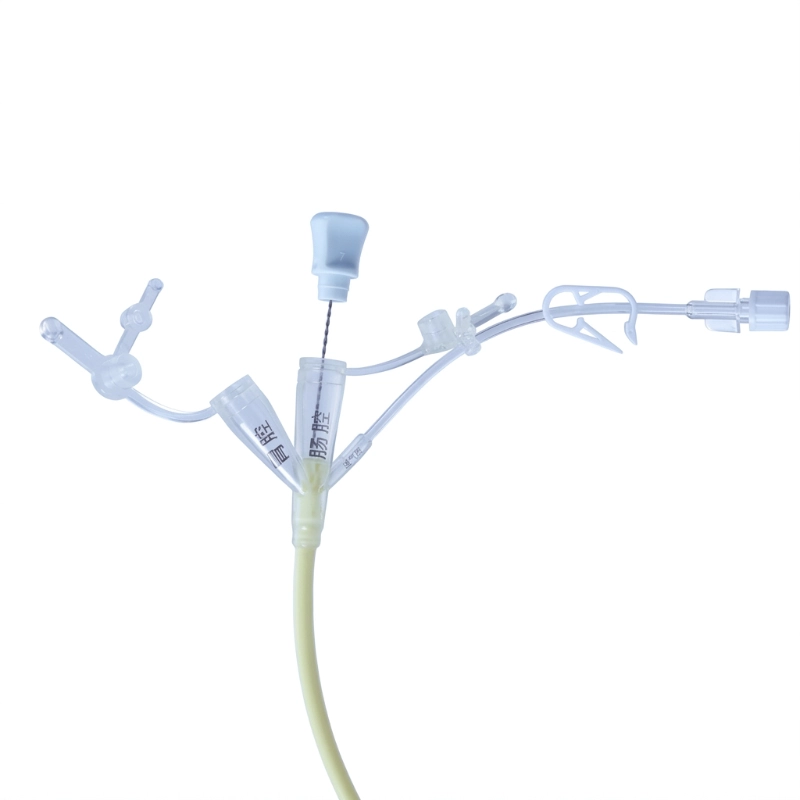
A dual-lumen nasogastric/nasointestinal tube, for example, may provide one pathway for jejunal feeding and another for gastric decompression. Its performance cannot be assessed by French size alone.
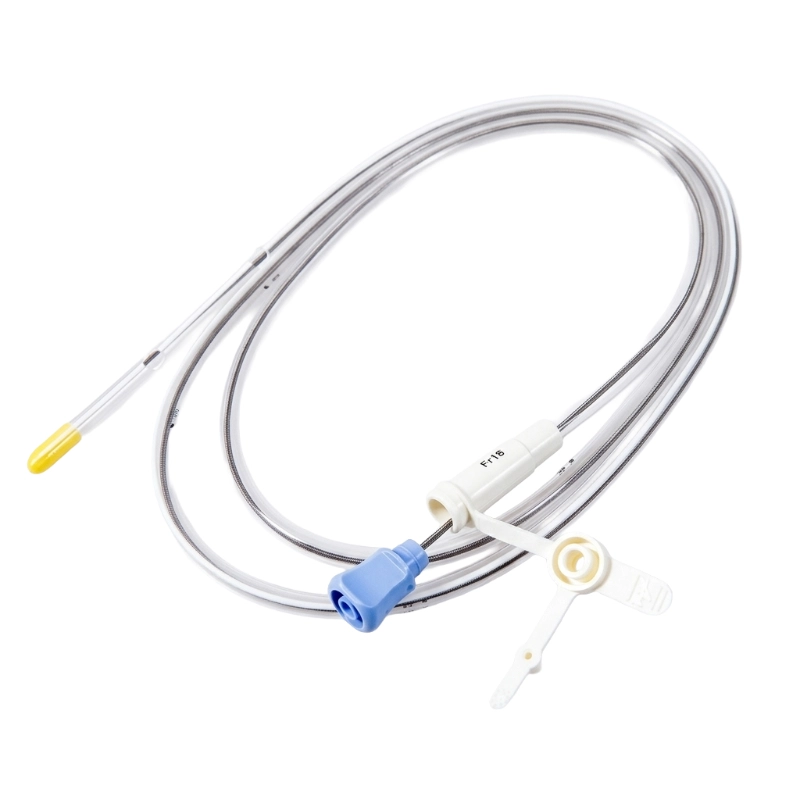
AOKOO Medical’s dual-lumen nasogastric/nasointestinal feeding tube lists size options from 8 Fr to 18 Fr, with customized options described on the product page. The product is designed for feeding and gastric decompression, so buyers should review the complete lumen specifications and intended use rather than treating the Fr number as a complete description.
What Should Distributors Check When Sourcing Feeding Tube Sizes?
For distributors and hospital procurement teams, a clear product specification reduces the risk of ordering a configuration that does not match the intended application.
Before placing an order, confirm:
- Available Fr sizes: Check the standard range and any customized options.
- Tube length: Confirm the required length for the intended anatomical route and patient group.
- Internal dimensions: Request relevant lumen specifications rather than relying only on external diameter.
- Material and construction: Review material information, flexibility, and any reinforcement or guidewire configuration.
- Connector type: Confirm compatibility with the intended feeding accessories and enteral system.
- Packaging and labeling: Verify size identification, intended use, and market-specific documentation.
- Quality and regulatory documents: Request the records required for the target market and purchasing organization.
OEM buyers should also confirm whether customized sizes are supported, what dimensional tolerances apply, and how product specifications are controlled during manufacturing.
AOKOO Medical Feeding Tube Size Options
AOKOO Medical offers nasogastric and nasointestinal feeding tube configurations with different sizes and lengths depending on the product. Some configurations also include radiopaque markers, optional guidewires, or multiple lumens.
Because specifications vary by model, buyers should verify the exact size range and intended use on the relevant product page. A size available for one tube should not be assumed to be available across the entire product portfolio.
Explore the AOKOO dual-lumen feeding tube to review the listed options for feeding and gastric decompression applications.
Frequently Asked Questions
What does 12 Fr mean for a feeding tube?
A 12 Fr tube has an approximate external diameter of 4.0 mm. Its internal diameter may differ between models, so the manufacturer’s technical specifications should also be reviewed.
Is a larger feeding tube always less likely to clog?
No. Internal diameter, formula properties, tube length, connector design, and handling all affect blockage risk. French size alone is not sufficient to predict performance.
Are French size and internal diameter the same?
No. French size indicates approximate external diameter. Internal diameter depends on wall thickness and internal construction.
How do I choose a feeding tube size for a child?
The size should be selected by qualified healthcare professionals based on the child’s anatomy, clinical needs, intended use, and applicable pediatric guidance. A general conversion chart is not a substitute for patient-specific assessment.
Can a manufacturer customize feeding tube size and length?
Some manufacturers offer customized configurations. Buyers should confirm the available options, dimensional tolerances, validation requirements, and regulatory implications directly with the supplier.
Conclusion
French size is an important starting point when selecting a feeding tube, but it does not fully describe the device’s flow characteristics or clinical suitability. Internal diameter, length, lumen configuration, connector compatibility, and intended use must also be considered.
For procurement teams, the most reliable approach is to compare complete product specifications and confirm the intended application with qualified clinical personnel. AOKOO Medical provides multiple feeding tube configurations, with product-specific size and length options available for review.