

Dual Lumen vs. Triple Lumen Feeding Tube: Which Is Better for Critical Care?
Release time: 2026-11-16
Table of Contents
Enteral feeding tubes are available in different configurations to meet the needs of patients with varying gastrointestinal conditions. A dual-lumen tube can combine jejunal feeding and gastric decompression, while a triple-lumen design adds a third independent channel for pressure balancing or monitoring, depending on the device.
For critical-care applications, the choice between these configurations depends on the functions required, the patient’s condition, and the clinical team’s management plan. More channels do not automatically mean better performance. The right design is the one that supports the intended functions without introducing unnecessary complexity.
What Is a Dual Lumen Feeding Tube?
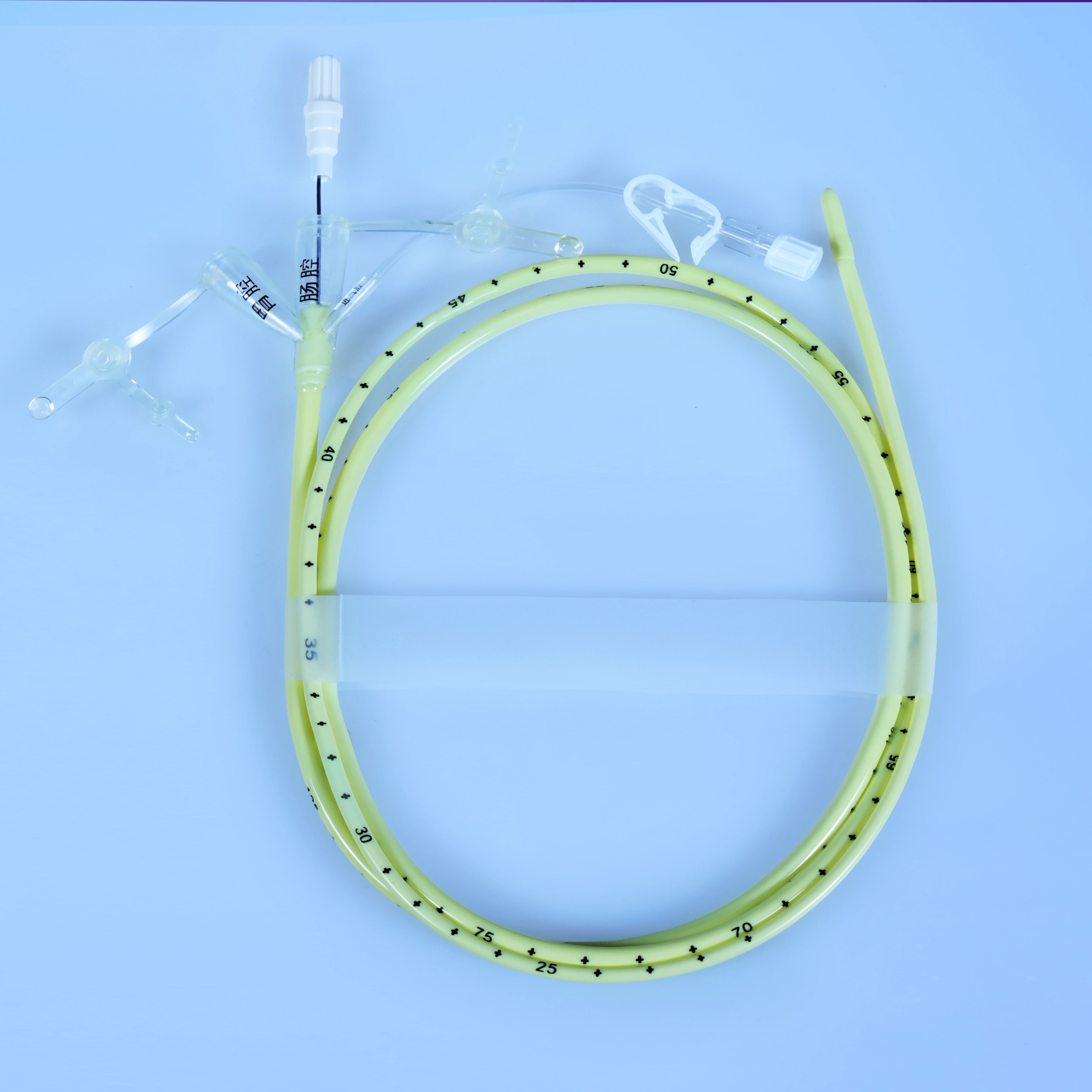
A dual-lumen nasogastric/nasointestinal feeding tube contains two separate internal channels.
In a common configuration, these channels support:
- Jejunal feeding: A dedicated pathway delivers enteral nutrition beyond the pylorus when post-pyloric feeding is indicated.
- Gastric decompression: A separate pathway allows gastric contents and gas to be drained.
This arrangement can be useful when a patient needs nutritional delivery into the small intestine while gastric drainage is managed at the same time.
The two functions are integrated into one tube assembly, but they remain separate pathways. Correct connection and use of each port are essential.
What Is a Triple Lumen Feeding Tube?
A triple-lumen feeding tube contains three independent channels. Depending on the product design, these may support:
- Gastric decompression: A channel for draining gastric contents and gas.
- Jejunal feeding: A dedicated pathway for delivering enteral nutrition into the small intestine.
- Pressure balancing or monitoring: A third channel that may provide venting or be designed for connection to a compatible pressure-monitoring system.
The third channel is the defining difference between a dual-lumen and triple-lumen design.
However, its precise function varies by device. Buyers should verify whether the third lumen is intended for pressure equalization, monitoring, venting, or another specified purpose. A pressure-monitoring function should not be assumed unless the product documentation confirms compatible use.
Dual Lumen vs. Triple Lumen Feeding Tube
| Comparison | Dual Lumen Feeding Tube | Triple Lumen Feeding Tube |
|---|---|---|
| Internal channels | Two | Three |
| Jejunal feeding | Yes, in the relevant configuration | Yes, in the relevant configuration |
| Gastric decompression | Yes | Yes |
| Third channel | Not available | Designed for pressure balancing or monitoring, depending on model |
| System complexity | Two functional pathways | Three functional pathways |
| Main consideration | Feeding plus drainage | Feeding, drainage, and an additional pressure-related function |
| Potential application | Patients requiring post-pyloric feeding and gastric drainage | Selected complex cases requiring an additional pressure-related pathway |
The third lumen adds functionality only when that additional function is clinically needed and supported by the device design.
When Is a Dual Lumen Feeding Tube Suitable?
A dual-lumen tube may be considered when the clinical plan requires both post-pyloric nutrition and gastric decompression.
Examples may include selected patients with:
- Gastric retention or impaired gastric emptying.
- Gastrointestinal conditions where gastric drainage is required alongside nutrition.
- Certain postoperative feeding requirements.
- Critical-care situations in which the care team determines that feeding beyond the pylorus and gastric drainage are both appropriate.
The key advantage is the ability to manage two separate functions through one tube assembly. Whether this is appropriate depends on the patient’s condition and the specific device’s intended use.
A dual-lumen design may be sufficient when no additional pressure-related function is required.
When Is a Triple Lumen Feeding Tube Worth Considering?
A triple-lumen tube may be evaluated in more complex situations where the clinical team requires feeding, gastric decompression, and a third pressure-related function.
Depending on the model, the additional channel may be used to balance pressure or connect to a compatible monitoring system. This can be relevant in selected critical-care or specialist gastrointestinal applications.
Before choosing a triple-lumen device, hospitals should clarify:
- What the third lumen is designed to do.
- Whether it is a venting channel or supports a specified monitoring setup.
- Whether compatible external equipment is required.
- How the third channel is connected, managed, and maintained.
- Whether the additional function is necessary for the intended clinical application.
A higher lumen count should not be treated as an automatic clinical upgrade. If the third channel is not required, a dual-lumen configuration may be the more straightforward choice.
Why Does Lumen Configuration Matter in Critical Care?
Critical-care patients may have multiple nutritional and gastrointestinal management needs. A tube that combines feeding and drainage can reduce the number of separate access devices required in some treatment plans.
Adding a third channel may provide another functional option, but it also increases the number of connections and the complexity of device management.
The clinical team must be able to distinguish each pathway, follow the correct connection procedure, and monitor the device according to its instructions.
For procurement teams, this means evaluating not only the number of lumens but also the clarity of port identification, connector configuration, and availability of supporting documentation.
What Design Features Should Buyers Compare?
Beyond lumen count, several technical features can influence product suitability.
Tube material
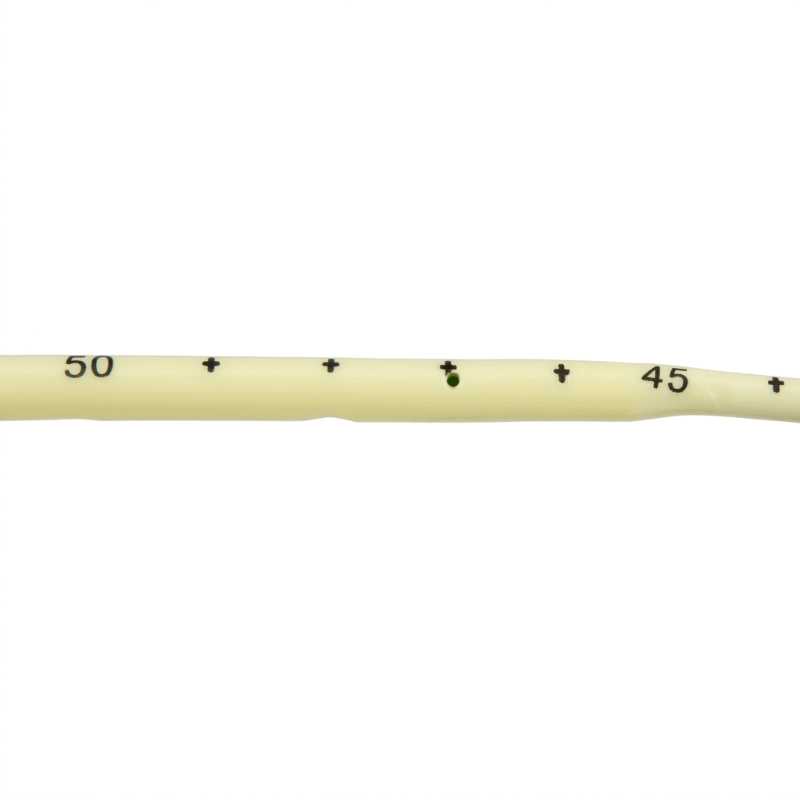
Medical-grade polyurethane is used in some nasogastric and nasointestinal tubes. Buyers should confirm the material specification, biocompatibility documentation, and intended duration of use for the exact model.
Tip design
Bullet, weighted, or other tip configurations may be offered for different placement approaches. The appropriate design depends on the product’s intended use and clinical protocol.
Radiopacity
Radiopaque markers can support X-ray visualization of the tube. Buyers should verify the marker configuration and the manufacturer’s stated specifications.
Transition geometry
Multi-lumen tubes may transition from a wider proximal section to a narrower distal section. A smooth internal transition is a relevant design consideration because uneven junctions may contribute to residue accumulation.
Connector configuration
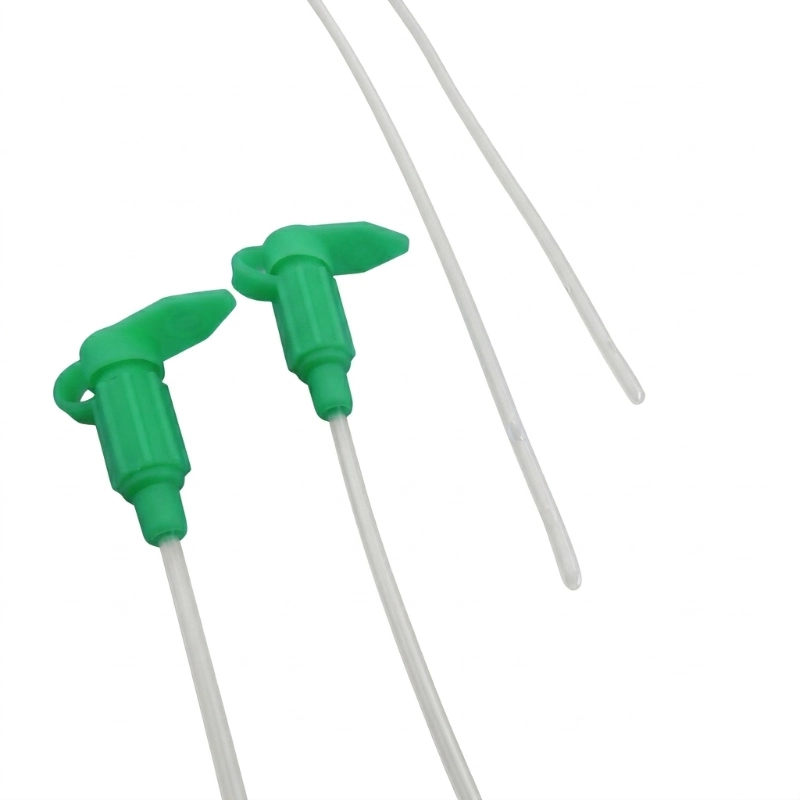
The feeding, drainage, and third-channel connections should be clearly differentiated. ENFit-compatible options may be available for enteral feeding connections, but buyers should confirm the exact connector arrangement for each lumen.
AOKOO Medical Dual and Triple Lumen Feeding Tubes
AOKOO Medical offers both dual-lumen and triple-lumen nasogastric/nasointestinal feeding tube configurations.
The dual-lumen model is designed for simultaneous jejunal feeding and gastric decompression. Its product specifications describe medical-grade polyurethane, a bullet tip, hydrophilic coating, radiopaque marking, optional guidewire, and ENFit or funnel connector options. Listed sizes range from 8 Fr to 18 Fr, with lengths from 100 cm to 160 cm and customization options.
The triple-lumen model adds a third channel for pressure balancing or monitoring, according to its product description. It is intended for more complex applications where the additional function is required.
For product details, see:
- AOKOO Dual Lumen Nasogastric/Nasointestinal Feeding Tube
- AOKOO Triple Lumen Nasogastric/Nasointestinal Feeding Tube
Buyers should confirm the third lumen’s exact function, connection requirements, size availability, and intended use against the current instructions for use before placing an order.
How Should Hospitals Choose Between Dual and Triple Lumen Tubes?
The selection process should begin with the required functions.
| Clinical or procurement question | Dual lumen | Triple lumen |
|---|---|---|
| Is post-pyloric feeding required? | Consider if the model supports it | Consider if the model supports it |
| Is gastric decompression also required? | Designed to support this function | Designed to support this function |
| Is an additional pressure-related pathway needed? | No dedicated third channel | May be suitable, depending on model |
| Is external monitoring equipment required? | Not for a third-lumen function | May be required for specified monitoring use |
| Is a simpler two-channel system sufficient? | Often the more straightforward option | May add unnecessary complexity if the third function is not needed |
Hospitals should also assess product labeling, sterilization, packaging, shelf life, regulatory status, and staff familiarity with the device configuration.
Frequently Asked Questions
What is the main difference between dual-lumen and triple-lumen feeding tubes?
A dual-lumen tube provides two separate channels, commonly for jejunal feeding and gastric decompression. A triple-lumen tube adds a third channel that may be used for pressure balancing or monitoring, depending on its design.
Is a triple-lumen feeding tube always better for ICU patients?
No. The additional channel is useful only when its function is required and supported by the clinical plan. A dual-lumen tube may be sufficient when feeding and gastric decompression are the only required functions.
What does the third lumen do?
Its function depends on the product. It may be designed for pressure equalization, venting, or connection to a compatible monitoring system. Buyers should check the exact product documentation rather than assuming all triple-lumen tubes work in the same way.
Can both types provide jejunal feeding and gastric decompression?
Yes, when the specific model is designed for these functions. The feeding and drainage pathways must be used according to the device instructions.
What should distributors check before sourcing triple-lumen feeding tubes?
Review the function of each channel, connection requirements, compatibility with external equipment, tube material, dimensions, radiopacity, sterilization, intended use, and regulatory documentation.
Conclusion
Dual-lumen and triple-lumen feeding tubes are designed for different levels of functional complexity. A dual-lumen tube can combine jejunal feeding and gastric decompression, while a triple-lumen model adds a third pressure-related pathway when the device is designed for that purpose.
The better option is determined by the required clinical functions, not simply by the number of channels. AOKOO Medical provides both configurations for hospitals and medical-device distributors evaluating specialized enteral access solutions.