

How Does ENFit Improve Safety in Enteral Feeding Systems?
Release time: 2026-09-23
Table of Contents
Enteral feeding systems connect tubes, syringes, feeding sets, pumps, and other components that work together to deliver nutrition to the gastrointestinal tract. As hospitals manage increasingly complex medical equipment environments, connector compatibility has become an important part of patient safety.
ENFit was developed specifically for enteral applications to reduce the risk of misconnections between enteral feeding devices and other medical lines. Based on ISO 80369-3, the ENFit connector system creates a dedicated connection standard for enteral nutrition.
For hospitals and medical device distributors, understanding ENFit Enteral Feeding is therefore important not only for connector selection but also for system compatibility and clinical workflow.
What Is ENFit?
ENFit is a standardized connector design developed for enteral feeding applications.
It is associated with ISO 80369-3, the international standard addressing small-bore connectors for enteral applications.
The central objective is simple:
Enteral feeding equipment should be distinguishable from connectors used for other clinical applications.
This helps reduce the risk of connecting an enteral feeding device to an incompatible medical line.
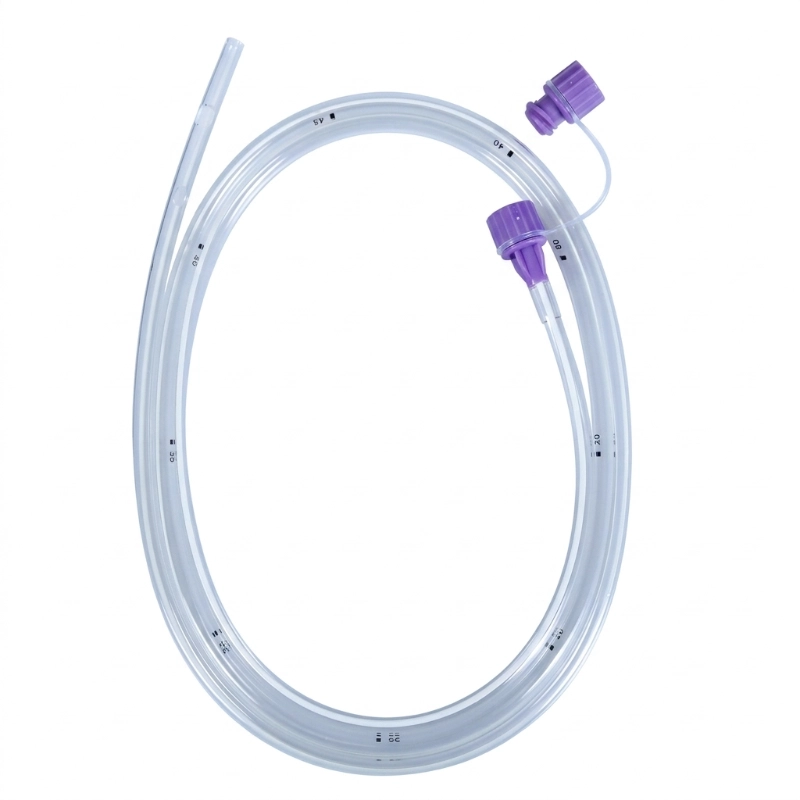
AOKOO offers ENFit-compatible feeding tubes and enteral feeding sets, and its product documentation identifies ISO 80369-3 compatibility as a key safety feature.
Why Are Enteral Connector Standards Important?
Hospitals use many types of tubing and connectors simultaneously.
A patient may have:
- Enteral feeding tubing
- Intravenous lines
- Respiratory tubing
- Drainage systems
- Catheters
- Monitoring equipment
If connector designs are too similar, there is a potential risk of unintended connections.
The purpose of ENFit is not to improve the nutritional formula itself. Instead, it addresses the interface between enteral equipment and the broader medical device environment.
How Does ENFit Reduce Misconnection Risk?
ENFit uses a connector configuration specifically designed for enteral applications.
This creates a more distinct interface between enteral and non-enteral medical systems.
| Connector Approach | Enteral Identification | Misconnection Prevention |
|---|---|---|
| Legacy connector | Less standardized | More dependent on workflow |
| ENFit connector | Dedicated enteral design | Designed to reduce cross-connection risk |
| ENFit system | Standardized ecosystem | Supports compatibility across enteral components |
The connector itself is only one part of the safety system. Staff training, labeling, equipment maintenance, and correct clinical procedures remain essential.
ENFit vs Legacy Enteral Connectors
The transition from legacy connectors to ENFit was driven by the need to create safer, more standardized medical-device interfaces.
| Feature | Legacy Enteral Connector | ENFit Connector |
|---|---|---|
| Standardization | Older systems vary | ISO 80369-3-based |
| Enteral-specific design | Less distinct | Yes |
| Misconnection prevention | More limited | Improved design barrier |
| Equipment compatibility | Depends on existing system | Designed around ENFit ecosystem |
| Procurement consideration | Existing installed base | Increasing standardization |
For hospitals upgrading their enteral feeding systems, connector compatibility should therefore be evaluated across the entire feeding pathway rather than on individual components.
Where Is ENFit Used?
ENFit can be incorporated into multiple enteral nutrition components, including:
- Enteral feeding tubes
- Feeding sets
- Feeding bags
- Enteral syringes
- Feeding pumps
- Extension sets
AOKOO’s enteral feeding sets are available with ENFit connectors and are designed for gravity and pump feeding applications.
Its nasogastric and nasointestinal feeding tubes can also be configured with ENFit connectors.
This creates an important advantage for hospitals seeking an integrated enteral feeding system rather than isolated components.
Why Does ENFit Compatibility Matter for Feeding Tubes?
A feeding tube is only one part of the enteral delivery pathway.
Even if the tube itself performs well, connector incompatibility can create problems during clinical use.
Hospitals should therefore consider:
Tube-to-Set Compatibility
The feeding tube connector should match the enteral feeding set being used.
Tube-to-Syringe Compatibility
If enteral syringes are used for medication administration or feeding, the connection system must be compatible.
Pump Compatibility
For continuous or controlled feeding, the tube and feeding set should work with the intended enteral pump system.
Procurement Standardization
Using standardized connectors can simplify equipment management across different hospital departments and reduce dependence on incompatible legacy components.
Does ENFit Improve the Tube Itself?
No.
ENFit is a connector standard, not a tube material or catheter-performance technology.
It does not directly determine:
- Tube flexibility
- Kink resistance
- Radiopacity
- Hydrophilic coating
- Tube patency
- Patient comfort
These properties depend on the feeding tube’s material and design.
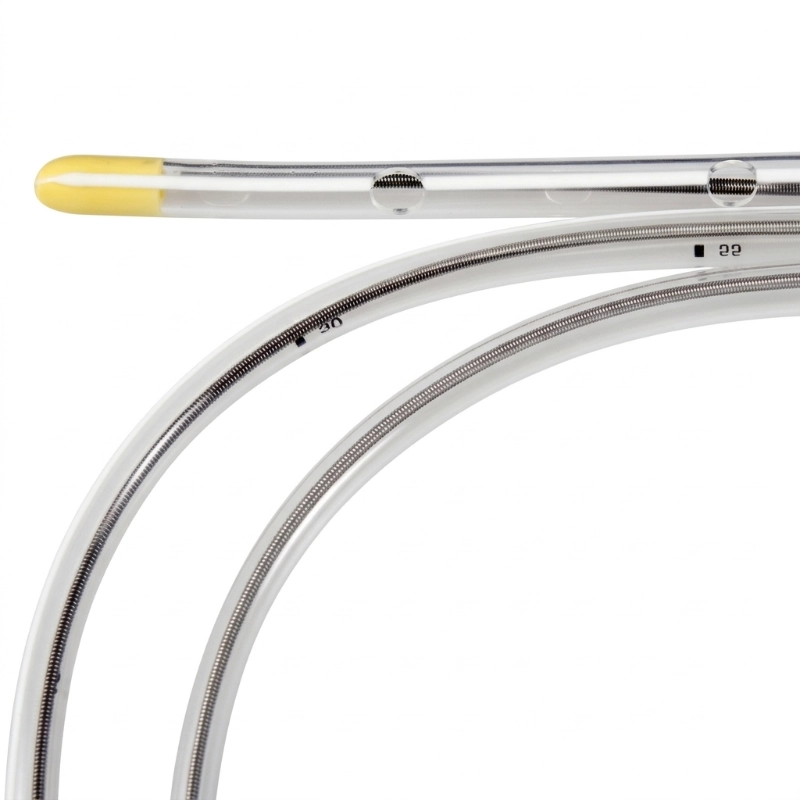
For example, AOKOO combines ENFit-compatible connectors with medical-grade TPU, radiopaque lines, hydrophilic coating, and guidewire configurations in selected nasogastric feeding tubes.
This distinction is important when evaluating products: connector safety and catheter performance should be assessed separately.
How Does ENFit Work With TPU Feeding Tubes?
TPU is increasingly used in enteral catheter designs because it can provide flexibility, kink resistance, and long-term patient tolerance.
Adding an ENFit connector creates a standardized interface at the proximal end of the catheter.
The resulting system combines:
TPU catheter → ENFit connector → enteral feeding set/pump/syringe
AOKOO’s TPU nasogastric feeding tube is available with ENFit configurations, while its product range also includes radiopaque and guidewire-assisted options.
What Should Hospitals Consider When Selecting ENFit Products?
ENFit compatibility should not be treated as the only procurement criterion.
A complete evaluation should consider:
| Factor | Why It Matters |
|---|---|
| ISO 80369-3 compatibility | Supports standardized enteral connections |
| Tube material | Influences flexibility and patient tolerance |
| Tube size | Must match the clinical application |
| Connector quality | Affects secure connection and workflow |
| Radiopacity | Supports tube-position assessment when required |
| Guidewire | Can support controlled insertion |
| Feeding set compatibility | Important for complete system integration |
| Sterilization | Required for appropriate clinical use |
Hospitals should also verify that all components used together are compatible with their existing enteral feeding equipment.
ENFit and Enteral Feeding System Procurement
For distributors and hospital procurement teams, ENFit can be viewed from a system perspective rather than as an individual connector feature.
A complete enteral feeding pathway may include:
- Feeding tube
- Extension line
- Feeding set
- Feeding bag
- Enteral syringe
- Feeding pump
If different connector standards are mixed without appropriate adapters or compatibility planning, workflow problems can occur.
A standardized ENFit ecosystem can simplify procurement and equipment management.
AOKOO’s portfolio covers both ENFit feeding tubes and ENFit enteral feeding sets, supporting a more integrated approach to enteral nutrition equipment.
Why Choose AOKOO Medical for ENFit Enteral Feeding Solutions?
AOKOO Medical develops gastrointestinal and enteral nutrition products for hospitals, distributors, and OEM partners.
Its portfolio includes ENFit-compatible nasogastric feeding tubes, nasointestinal feeding tubes, dual- and triple-lumen feeding systems, and enteral feeding sets for gravity and pump applications.
This product range allows buyers to evaluate connector compatibility alongside tube material, radiopacity, guidewire support, hydrophilic coating, and feeding-system requirements.
For organizations sourcing ENFit Enteral Feeding products, AOKOO provides configurable medical-device solutions designed around standardized connections, clinical usability, and enteral nutrition system integration.
Frequently Asked Questions
What is an ENFit connector?
ENFit is an enteral-specific connector system associated with ISO 80369-3. It is designed to improve the distinction between enteral feeding connections and other medical-device connections.
Why is ENFit important for enteral feeding?
ENFit is designed to reduce the risk of misconnections between enteral feeding systems and non-enteral medical lines.
Is ENFit the same as ISO 80369-3?
ENFit refers to the enteral connector design used within the ISO 80369-3 standard framework. ISO 80369-3 specifies requirements for connectors used in enteral applications.
Can ENFit connectors be used with TPU feeding tubes?
Yes. AOKOO offers TPU nasogastric feeding tubes with ENFit-compatible connector configurations.
Does ENFit improve feeding tube performance?
ENFit primarily improves connector standardization and helps reduce misconnection risk. It does not directly determine the tube’s flexibility, radiopacity, hydrophilic coating, or anti-clogging performance.
Does AOKOO manufacture ENFit feeding sets?
Yes. AOKOO offers ENFit-compatible enteral feeding sets for gravity and pump feeding applications, including different bag capacities.