

What Makes a TPU Nasogastric Feeding Tube Better for Long-Term Use?
Release time: 2026-08-24
Table of Contents
Long-term enteral nutrition places different demands on a feeding tube than short-term gastric access. When a tube remains in place for an extended period, flexibility, kink resistance, patient tolerance, and material performance become just as important as basic nutrient delivery.
This is one reason medical-grade thermoplastic polyurethane (TPU) has become an important material for modern nasogastric feeding tubes. Compared with conventional rigid or less flexible tubing materials, TPU can combine flexibility with mechanical strength while maintaining the performance required for enteral nutrition.
For hospitals and medical device distributors, understanding the relationship between material selection and long-term tube performance is essential when choosing a reliable TPU Nasogastric Feeding Tube.
What Is a TPU Nasogastric Feeding Tube?
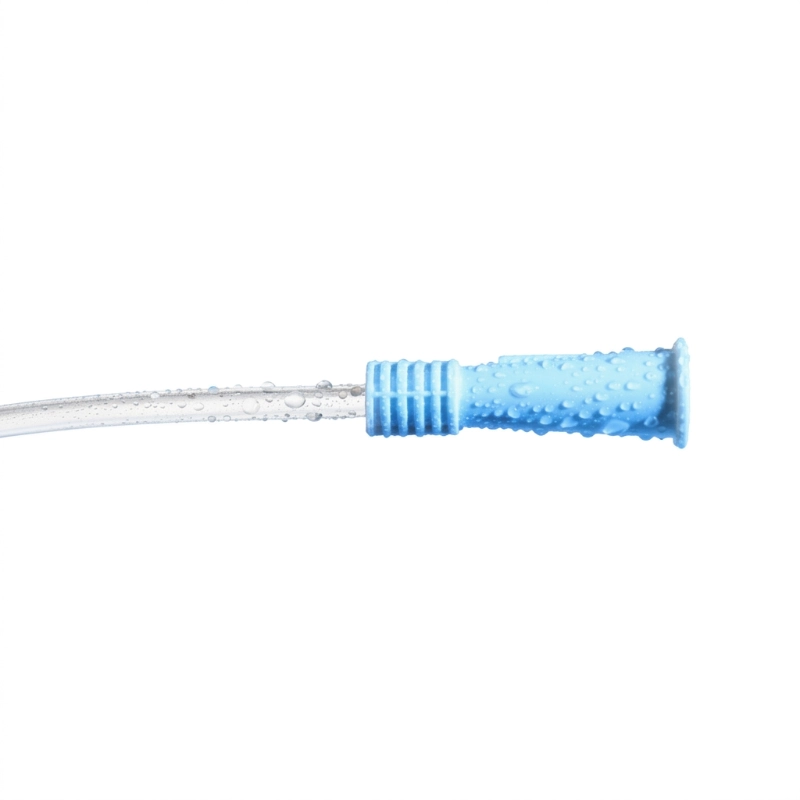
A TPU Nasogastric Feeding Tube is an enteral feeding device manufactured using medical-grade thermoplastic polyurethane.
The tube can be inserted through the nose or mouth and positioned in the stomach. Depending on the product configuration and clinical application, nasoenteric tubes can also be designed for placement toward the duodenum or jejunum.
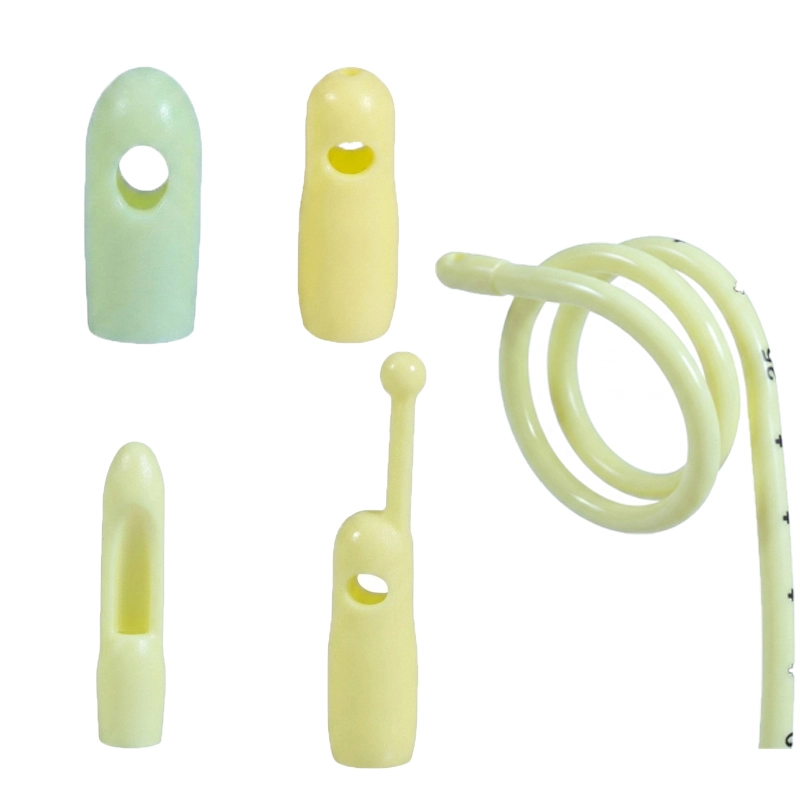
AOKOO’s medical-grade TPU nasogastric feeding tube is designed for enteral nutrition and can incorporate a stylet, radiopaque lines, hydrophilic coating, anti-clog feeding port, and different connector configurations.
The key advantage of TPU is not simply that it is “soft.” A useful medical catheter needs to balance several properties at the same time:
- Flexibility
- Kink resistance
- Dimensional stability
- Biocompatibility
- Surface performance
- Patient comfort
- Manufacturability
Why Does Material Matter for Long-Term Enteral Feeding?
When a feeding tube is used over an extended period, its interaction with the patient’s body becomes increasingly important.
A tube that is too rigid may cause unnecessary discomfort or irritation. A tube that is excessively soft may be more difficult to advance or more susceptible to deformation.
This creates a fundamental engineering challenge:
How can a feeding tube remain flexible enough for patient comfort while maintaining sufficient structural stability for reliable clinical use?
Medical-grade TPU offers a useful balance between these requirements.
AOKOO describes its TPU nasogastric feeding tubes as flexible, kink-resistant, and suitable for long-term enteral feeding applications, with configurations designed for use up to 30 days depending on the product specification.
TPU vs PVC Feeding Tube: What Are the Key Differences?
PVC remains widely used in disposable medical tubing, but TPU provides different material characteristics that can be valuable in certain enteral feeding applications.
| Property | TPU Feeding Tube | Conventional PVC Feeding Tube |
|---|---|---|
| Flexibility | High | Depends on formulation |
| Kink resistance | Strong | Depends on wall structure |
| Patient comfort | Suitable for soft catheter designs | Varies by formulation |
| Surface technology | Compatible with hydrophilic coating | Also possible with suitable designs |
| Long-term application | Commonly selected for extended use | Application-dependent |
| Material engineering | Highly tunable polyurethane platform | Flexible PVC requires plasticizer formulation |
This comparison should not be interpreted as meaning TPU is universally superior to PVC. Material selection should always be based on the intended application, product specifications, regulatory requirements, and clinical protocols.
The strength of TPU is that it provides manufacturers with a versatile material platform for developing flexible enteral catheters.
How Does TPU Improve Patient Comfort?
Patient comfort is particularly important when a feeding tube remains in place for an extended period.
A nasogastric tube passes through sensitive anatomical structures, so excessive stiffness can increase the sensation of a foreign body and mechanical irritation.
TPU allows manufacturers to engineer a catheter with a balance of:
Flexibility
The tube can conform more easily to anatomical pathways instead of behaving like a rigid shaft.
Kink Resistance
Flexibility needs to be combined with sufficient structural stability. A tube that collapses easily may compromise feeding performance.
AOKOO’s TPU feeding tube is designed to resist kinking while maintaining flexibility.
Softening Characteristics
AOKOO’s product information describes the medical-grade TPU tube as softening at body temperature, which is intended to support patient comfort during use.
Together, these properties help explain why TPU is increasingly used for enteral catheters where comfort and extended indwelling time are important considerations.
What Makes a TPU Feeding Tube Suitable for Long-Term Use?
Material alone does not determine whether a feeding tube is appropriate for prolonged use. The entire catheter design matters.
1. Smooth Surface and Hydrophilic Coating
Surface friction affects insertion comfort and tissue interaction.
AOKOO combines TPU with hydrophilic coating options. When hydrated, the coating forms a lubricating hydrogel layer that reduces friction during insertion.
2. Radiopaque Design
Long-term tube management requires reliable identification of tube position when clinically indicated.
AOKOO offers different radiopaque configurations, including single, double, triple, and full radiopaque options depending on customer requirements.
3. Guidewire-Assisted Placement
Some tube configurations include a removable stylet. AOKOO uses a 304 stainless-steel guidewire with a specially treated structure and rounded tip to support controlled insertion.
4. Anti-Clog Feeding Port
Tube patency is essential for enteral nutrition. A feeding tube that becomes blocked can interrupt nutritional delivery and require additional nursing intervention.
AOKOO’s TPU feeding tube configurations include anti-clog feeding port designs intended to support continuous feeding performance.
Which Patients May Benefit From TPU Enteral Feeding Tubes?
A TPU Enteral Feeding Tube may be considered across several clinical applications where patients cannot obtain sufficient nutrition through normal swallowing.
Common applications include:
- ICU nutritional support
- Postoperative enteral feeding
- Patients with dysphagia
- Long-term enteral nutrition
- Patients requiring gastric decompression
- Nasoenteric feeding toward the duodenum or jejunum
The exact tube type and placement should always be determined according to the patient’s clinical condition and applicable medical protocols.
What Should Hospitals Consider When Buying TPU Feeding Tubes?
For procurement teams, comparing only the material name is not enough.
A more complete evaluation should include:
| Procurement Factor | Why It Matters |
| TPU material quality | Determines flexibility and mechanical performance |
| French size | Must match patient and clinical requirements |
| Length | Determines suitable placement and application |
| Radiopacity | Supports imaging-based tube position assessment |
| Guidewire | Can improve insertion control |
| Hydrophilic coating | Helps reduce insertion friction |
| Connector | Must match the enteral feeding system |
| Sterilization | Essential for safe clinical use |
| Indwelling duration | Should match the validated product specification |
For distributors and OEM buyers, manufacturing consistency is equally important. Stable raw material sourcing, dimensional control, sterilization capability, and quality management all influence the reliability of the finished feeding tube.
Why Choose AOKOO Medical for TPU Nasogastric Feeding Tubes?
AOKOO Medical develops gastrointestinal and enteral nutrition devices for hospitals, distributors, and OEM partners.
Its medical-grade TPU nasogastric feeding tube platform combines multiple technical options, including hydrophilic coating, radiopaque visibility, guidewire assistance, anti-clog feeding ports, different French sizes, and connector configurations.
This modular approach allows AOKOO to address different clinical and procurement requirements rather than relying on a single standardized tube configuration.
For organizations looking for a TPU Nasogastric Feeding Tube for long-term enteral nutrition, AOKOO Medical provides medical-device manufacturing experience and configurable product solutions focused on material performance, patient comfort, and clinical usability.
Frequently Asked Questions
What is a TPU Nasogastric Feeding Tube?
A TPU Nasogastric Feeding Tube is an enteral feeding catheter made from medical-grade thermoplastic polyurethane. It is designed to deliver nutrition to patients who cannot obtain adequate nutrition through normal swallowing.
Why is TPU used for long-term feeding tubes?
TPU offers a combination of flexibility, kink resistance, and mechanical stability that can be useful when a feeding tube needs to remain in place for an extended period.
Is TPU better than PVC for feeding tubes?
Not universally. TPU and PVC have different material characteristics. TPU can be advantageous when flexibility, catheter comfort, and long-term material performance are priorities, while the appropriate material depends on the specific product and clinical application.
Can TPU feeding tubes have hydrophilic coatings?
Yes. TPU feeding tubes can be engineered with hydrophilic surface coatings. AOKOO combines medical-grade TPU with hydrophilic coating options to reduce surface friction during insertion.
Can TPU nasogastric tubes be used with a guidewire?
Yes. AOKOO offers TPU nasogastric feeding tube configurations with a removable stylet/guidewire designed to assist insertion.
How long can a TPU feeding tube remain in place?
The appropriate indwelling period depends on the specific product, clinical protocol, patient condition, and regulatory labeling. AOKOO lists configurations designed for use up to 30 days, but the validated duration of the specific product should always be followed.