


Nasoenteric Tube
The triple lumen nasoenteric tube with integrated temperature and pressure monitoring combines enteral feeding, gastric decompression, and pressure equalization in a single tube.
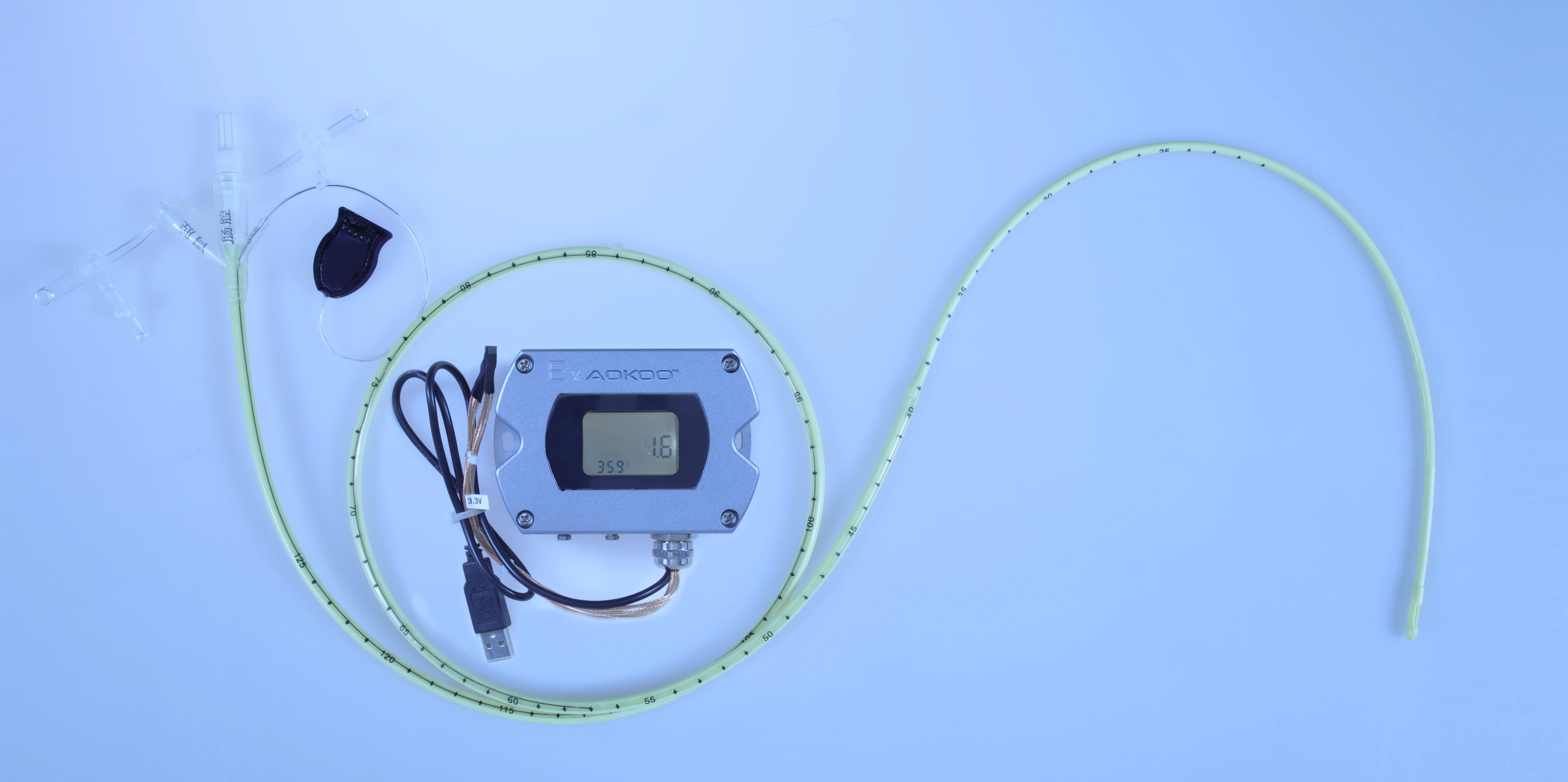
Triple-Lumen Nasoenteric Tube: Key Features
Triple-Lumen Functionality & Smooth Variable-Diameter Transition
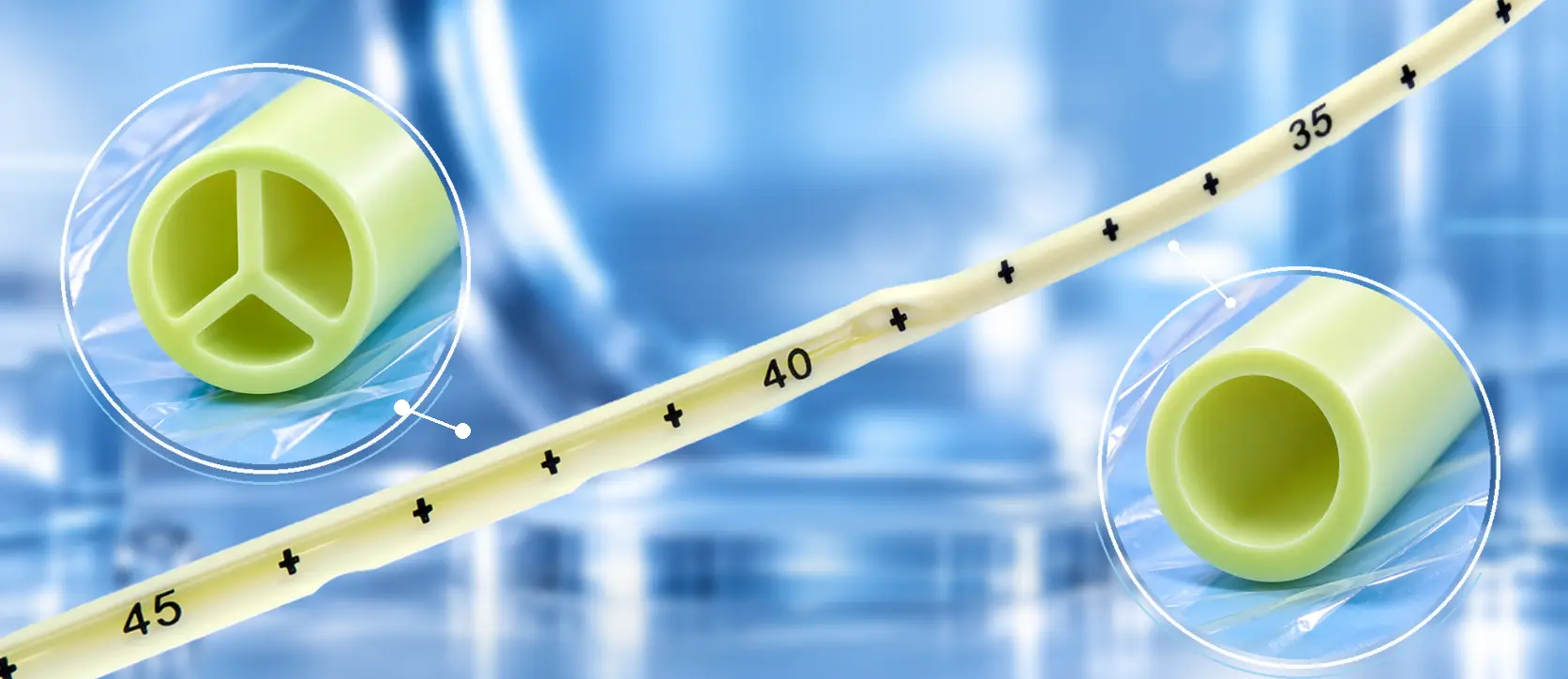
Integrated Triple-Lumen Design
Triple-Lumen Functionality & Smooth Variable-Diameter Transition
- The triple lumen nasoenteric tube features three dedicated proximal lumens for enteral feeding, gastric decompression, and pressure equalization. The feeding lumen provides a pathway for nutrient delivery, while the gastric decompression lumen supports the removal of gastric contents. Multiple side openings in the pressure-equalization section are designed to facilitate ventilation during gastric management.
- Its variable-diameter structure provides a smooth, step-free internal transition from the proximal triple-lumen section to a continuous single-lumen distal feeding pathway. This design is intended to minimize potential nutrient retention areas while maintaining a dedicated feeding channel.
The dedicated lumen arrangement allows the feeding and gastric management pathways to perform their respective functions within the same catheter. The gastric decompression and pressure-equalization lumens work together to support gastric drainage and ventilation, while the distal feeding pathway remains dedicated to nutrient delivery. This functional separation is an important consideration in the design of a multifunctional nasoenteric tube.
Integrated Temperature & Pressure Monitoring
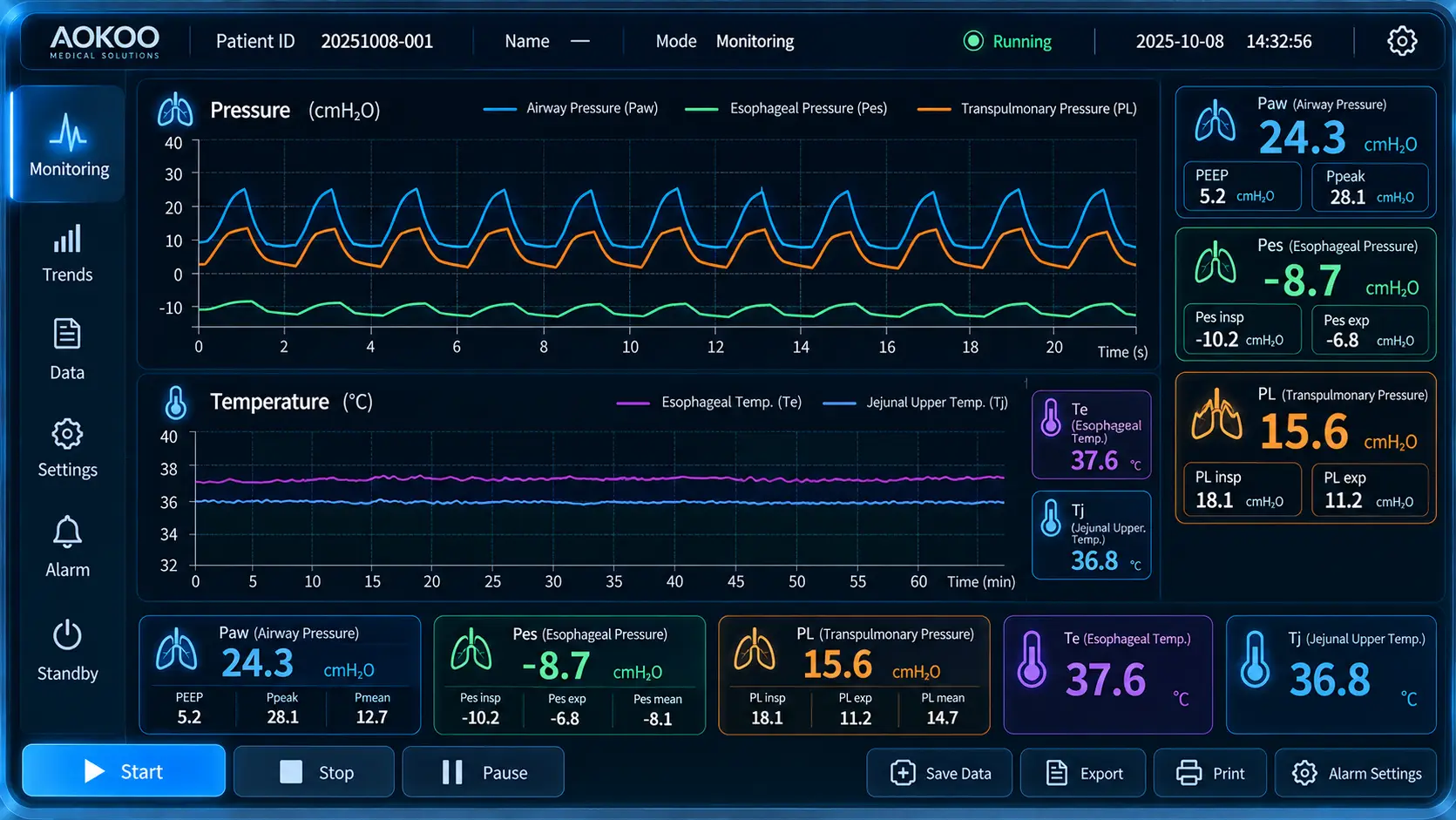
Integrated Sensing Configuration
Integrated Temperature & Pressure Monitoring
Temperature and pressure sensors can be integrated into the tube at designated gastrointestinal locations. Depending on the intended application, their positions can be configured for measurements in the stomach, intestinal tract, or both.
The sensors connect through wires to an external monitoring device, allowing temperature and pressure measurements from the selected sites to be displayed.
The integrated sensing configuration of the triple lumen nasoenteric tube combines gastrointestinal temperature and pressure measurements with its enteral feeding and gastric management functions. These electronic measurements are distinct from the mechanical pressure-equalization function of the triple-lumen structure.
Sensor placement can be discussed according to the intended measurement location and product configuration. For applications requiring different measurement sites, the arrangement of sensing elements and connecting wires can be evaluated during product development. Integrating these components into the catheter design requires consideration of both the monitoring requirements and the tube’s primary feeding and gastric management functions.
Medical-Grade TPU & Patient-Oriented Design

Medical-Grade TPU
Medical-Grade TPU & Patient-Oriented Design
- Manufactured from medical-grade thermoplastic polyurethane (TPU), the triple lumen nasoenteric tube combines material flexibility with the structural requirements of a multi-lumen catheter. Material selection takes the functional design and patient comfort into consideration.
- The flexible body of the triple lumen nasoenteric tube and its variable-diameter configuration are designed to accommodate enteral feeding and gastrointestinal management functions. Tube dimensions, lumen configurations, and material-related specifications can be evaluated according to different product and application requirements.
Full-Length Radiopacity
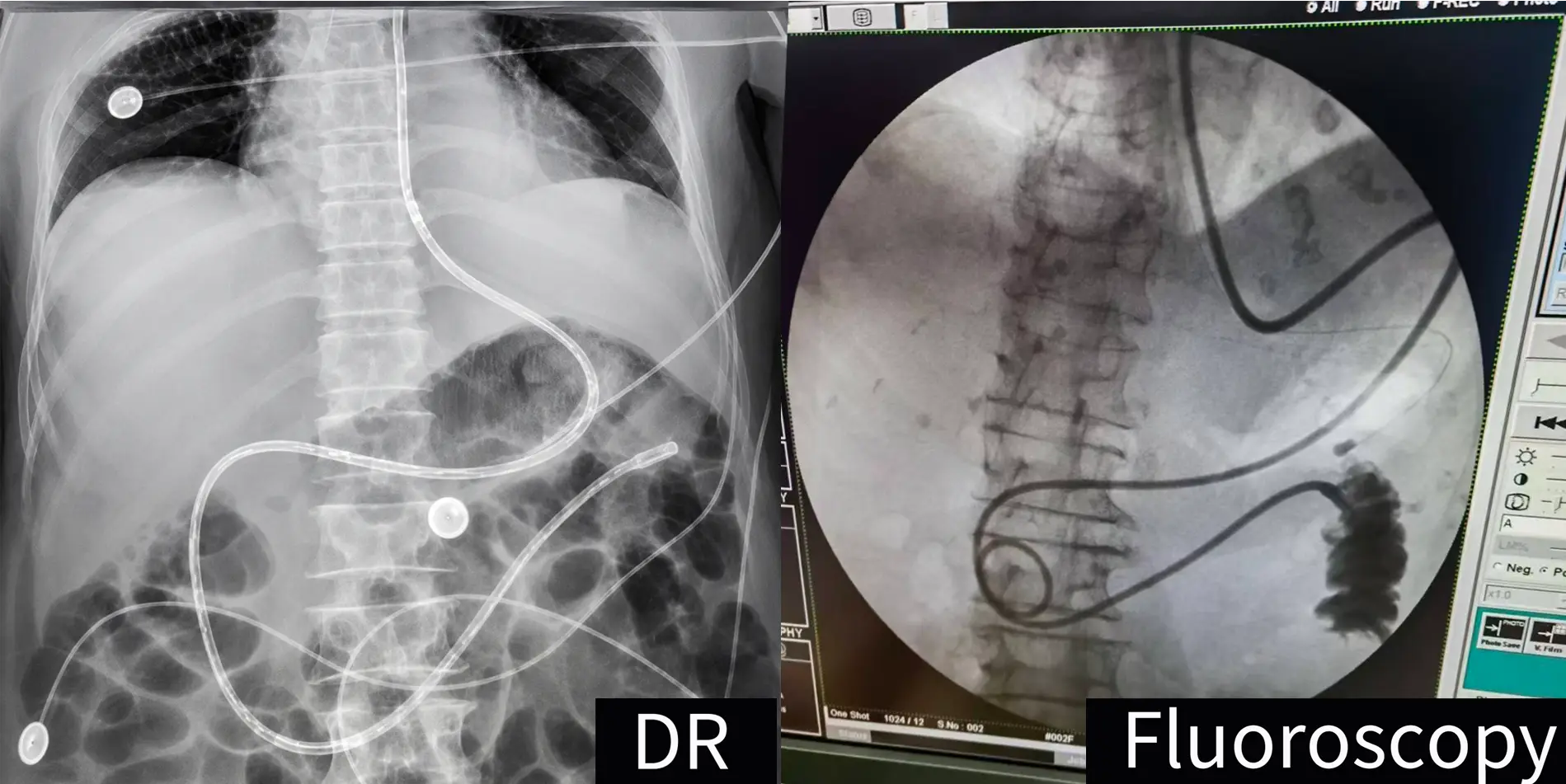
Full-Length Radiopacity
Full-Length Radiopacity
The tube features full-length radiopacity, enabling visualization under X-ray imaging to support tube position confirmation during clinical use.
| No. | Product Name | Model | OD (mm) | Length (cm) | Sensor Configuration | Tip Options | Packaging |
|---|---|---|---|---|---|---|---|
| 1 | Triple-Lumen Nasoenteric Tube with Temperature & Pressure Sensor | AKW-316-4 | 5.3 | 135 |
0.4 mm Temperature & Pressure Sensor |
Bullet-shaped Tip
Showerhead-style Tip Selectable |
5 pcs / box 30 pcs / carton |
| 2 | Triple-Lumen Nasoenteric Tube with Temperature & Pressure Sensor | AKW-315-4 | 5.0 | 135 | |||
| 3 | Triple-Lumen Nasoenteric Tube with Temperature & Pressure Sensor | AKW-314-4 | 4.7 | 135 |
Swipe horizontally to view all specifications →